Showing posts with label Frank Miller. Show all posts

Monday, January 30, 2012

Holy Terror

Originally pitched as Batman versus al Qaeda, Holy Terror is Frank Miller's response to the 9/11 attacks and the resulting conflicts since. It references events such as the World Trade Center bombings and the beheading of Daniel Pearl, and it caricatures major political figures. These depictions highlight a range of feelings about the situation, from denial to outrage to sheer horror to, most distressingly, a thirst for revenge. Miller makes disturbing moves, depicting the Arabs in the story as relics of the Middle Ages and questioning if they are even human because of their actions. I was disgusted by the cavalier racism and ethnic stereotyping.

Because he balked at having Batman involved in such an adventure, Miller transformed the main character into a generic superhero named The Fixer. He also had to shift his fighting partner from Catwoman to a slinky cat burglar named Natalie Stack. The story begins with The Fixer chasing Stack after a heist, as part of a frenetic and rough mating ritual. After their daliance is disturbed by a series of escalating bombings, the duo set out to stop the terrorists from obliterating Empire City.

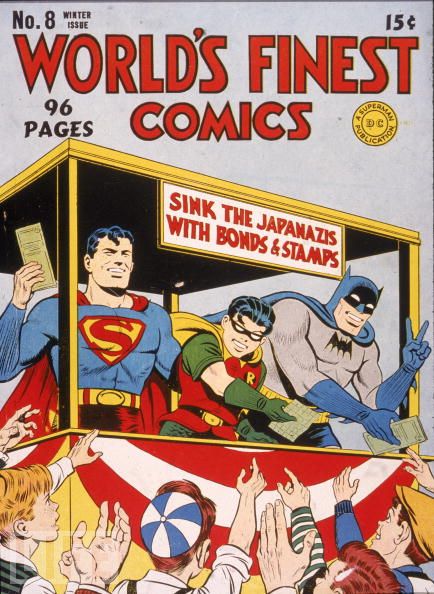
Placing superheroes into world events is nothing new. Captain America #1 famously showed Cap punching Hitler out, and Superman and others advertised for war bonds all throughout World War II. The Punisher was originally a Vietnam War veteran who was disillusioned with the US justice system. However, it is easy to see why DC would not have published this story with Batman in it. In the space of one night, the Fixer tortures a captive terrorist for information, shoots dozens of generic Arab terrorists, and detonates a weapon of mass destruction beneath Empire City. He behaves in thoughtless, vengeful, ultra-macho fashion. He does and takes whatever he wants, from sex with a cat burglar to bloody vengeance on the nameless terrorist fodder who fall in his path. Instead of a hero, The Fixer seems like a hyper-steroid version of the Abu Ghraib prison guards.

The book ends with an echo from his classic The Dark Knight Returns, focusing on the police commissioner. Only instead of a happy ending where he needlessly worries about his family who are ultimately safe, this time he experiences the real terror that comes from the vacuum left by their deaths. This possibly poignant scene seems forced after so many pages of mindless, macho violence. If this graphic novel is to be called successful in any way, it seems to be in capturing the maelstrom of sensations and emotions that terrorism evokes as well as the seeming futility in determining a feasible course of action.

It is difficult to believe that Miller would downplay the sacrifice of so many soldiers and civilians in the wake of 9/11, not to mention that long, hard hours actual people have worked to respond to countless conflicts, to elevate the insanely unrealistic actions of a superhero. Perhaps this book is a commentary on the ultimate inability for superhero narratives to deal with such serious and complex issues, but Miller seems to relish the action, sex, and violence too much for me to credit him that intention. He speaks about his intentions with this comic in this interview.

In terms of art, the book progresses from some dynamic and detailed layouts to increasingly sketchy and rushed artwork. It appears that Miller sacrificed the rendering to get the book finished, which seems strange for a book the publishers claim was "ten years in the making."

Most reviews I have seen are mixed at best, but some call the book terrible. David Brothers found much to dismay him in this graphic novel, summing up that Miller is "punching far below his weight class." Ryan K. Lindsay wrote that he found some parts stunning and that the book works well as a piece of propaganda but not always as a comic. Sean Kleefeld wrote that the book is full of what Miller does well "but none of it of any real substance." Johnny Destructo called it "Sloppy, arrogant work by an arrogant bastard." J. Caleb Mozzocco summed up his take on the book, "It’s beautiful artwork, in service of an ugly story and uglier still politics. I guess that’s what happens when a genius cartoonist gets terrorized, and puts pen to paper while still in a state of fear." In contrast to many of these reviews, Bob Temuka wrote about liking the art, the visceral thrills of the book, and its potential therapeutic value for Miller at least.

Holy Terror was published by Legendary Entertainment, which is owned by Warner Brothers, also the owners of DC Comics. They provide a video trailer here.

Friday, January 27, 2012

Happy 55th Birthday, Frank Miller!

Frank Miller has become a lightning rod lately because of his incendiary comments about the Occupy Movement in the US, and he is probably best known now for his comics works turned blockbuster movies Sin City and 300.

Miller has been closely related to two large comics properties, Daredevil and Batman, and his work on both characters has been seen widely as being definitive and noteworthy. He created and introduced the character Elektra into Daredevil's stories and wrote crime drama type stories that reinvigorated the series into one of Marvel's top titles. Two collaborations with artist David Mazzucchelli, Daredevil: Born Again and Batman: Year One, are considered modern classics and are perennial bestsellers.

His comics work is also notable because he was one of the first mainstream American artists to draw on Japanese influences in his work, from the martial arts and ninja stories in Daredevil to the manga style of his limited series Ronin, a dystopian future story about a reincarnated samurai warrior. Another of his miniseries for DC, The Dark Knight Returns, chronicles the adventures of an older, broken down Batman and was pivotal in a movement towards more realistic and grim American superhero comics.

Miller parlayed his comics work to Hollywood, where he worked on movies such as the sequels Robocop 2 and 3. After disillusionment with these films, Miller returned to comics working on creator-owned properties such as Give Me Liberty, another dystopian future series starring Martha Washington, the noir influenced Sin City, and the epic 300 that adapted the story of the Spartans' stand at Thermopylae. Most recently, he published Holy Terror, a controversial and bombastic Batmanesque superhero story where the protagonist goes up against Al Qaeda.

In recent years, Miller was lured back to Hollywood where he co-directed the adaptation of his Sin City stories and also had great input on the 300 movie. Both films lean heavily on Miller's artistic style and are very closely linked visually to the comics. Miller went on to write and direct an adaptation of the classic Will Eisner character The Spirit, but that movie was not very well received. Currently he is is working on a Sin City sequel.

A multiple Eisner, Kirby, and Harvey Award winning creator, Frank Miller's influence on American comics has been great. Furthermore, his current work continues to entertain and rankle many readers and viewers.

Sunday, April 18, 2010

Tim O'Neil and the Tao of Miller

I know I posted on The Dark Knight Returns a while ago now, but this blog post does a great job expressing a different take on Frank Miller and his now-classic work...

Wednesday, August 19, 2009

Batman: The Dark Knight Returns


1986 was a big year for comic books and graphic novels, with the publication of Art Spiegelman's first volume of Maus, Alan Moore and Dave Gibbons' Watchmen, and Frank Miller's The Dark Knight Returns, three works that have gathered much critical acclaim and commercial success. Each has also had a profound influence on a great number of sequential art works since. A 4-issue limited series, DKR was part of Dick Giordano's plan to put DC Comics at the top of the comics world by hiring the best talents to produce the best works. DKR's status was conveyed by its Prestige format, with thicker, glossier pages and thicker binding. Also, each of the four books cost $2.95, quite a mark-up from the typical 65 cent comics found on newsstands at the time.

DKR takes up a typical trope of DC Comics stories, the glimpse-into-the-future story, except in a much grimmer manner. When this story begins, Bruce Wayne has long given up his mantle as Batman, because of the death of Robin, and lives his life as a drunken, reckless playboy. Gotham City has sunk into a cesspool of crime, chiefly because of a gang called the Mutants, and it is only through a random series of events, which include his enemy Two Face being rehabilitated and released from Arkham Asylum, that he resumes his role as a dark avenger of the night.

In many ways, the story is a response to Ronald Reagan style Republicanism, and it contains a number of references to 1980s popular culture, including Dr. Ruth and David Letterman (when he was still on NBC). As part of the narrative, we see what has happened to a number of other characters, including Superman, the Joker, Catwoman, and Green Arrow, and are introduced to Carrie Kelly, who takes up the role of Robin. DKR was eventually followed by a sequel, 2001's The Dark Knight Strikes Again.

At the time of DKR's publication, Frank Miller was one of the hottest artists working in comics, just having come off popular, landmark, definitive work on Marvel Comics' Daredevil and Wolverine. DKR continued his streak of hits, which he extended soon afterward with his Batman: Year One story illustrated by David Mazzucchelli.

Feeling the lure of Hollywood after comic book success, Miller went on to work on the two Robocop sequels, ventures met with less than success, before returning to comics to create the series Martha Washington, Sin City, and 300. He returned to Hollywood after a few years, working in conjunction with Robert Rodriguez to direct Sin City. Today, Miller is perhaps best known for his successes in converting that series as well as 300 into films. Not everything about his recent film career has been peaches and cream, however, as he was also responsible for the movie version of Will Eisner's The Spirit, a critically panned box office failure.

Miller continues to create comics with artist Jim Lee as they collaborate on the sporadically published All-Star Batman and Robin the Boy Wonder. Batman is a character with a long history and different iterations over the decades. For interested readers, here are a wiki archive chronicling a great amount of that history as well as a fansite for different media versions and upcoming news. For more information about Frank Miller, you can visit his Lambiek artist's profile or this unofficial website that archives much, if not all, of his work.

Almost every review I could locate about DKR was positive, as represented by these three, one from Bill Ramey, one by Dave Wallace, and one by Tom Knapp. One contrary opinion I could find was expressed by Mordecai Richler who wrote a review for the New York Times in 1987 that takes issue with Miller's work, citing a lack of imagination and poo-pooing comic books in general.