Showing posts with label biography. Show all posts

Sunday, September 20, 2026

Graphic Science: Seven Journeys of Discovery

I have read a number of graphic novels by Darryl Cunningham, who has mainly focused his work on nonfiction, writing biographies about billionaires, Vladimir Putin, and Ayn Rand, as well as explorations of psychiatric conditions and science denial. He infrequently blogs here, sharing a look into some of his more recent fictional work.

I recently checked out his book Graphic Science from my local library, because local libraries rule. I had not read it before, though it has been out for some time, and I found it included biographies of several scientists whom I did not know much, if anything, about.  They are:

Antoine Lavoisier: A French chemist who named oxygen and identified it as a chemical element, beginning the system of organizing elements that eventually came to be represented in the periodic table.

Mary Anning: An English fossil collector whose discoveries changed how researchers thought about prehistoric life.

George Washington Carver: A Black-American botanist who studied ways to combat soil depletion as well as peanuts and sweet potatoes.

Nikola Tesla: A Serbian-American inventor who pioneered work with alternating current electricity and whose inventions paved the way for modern society.

Alfred Wegener: A German climatologist who explored and mapped polar regions and also put forth the first theories about continental drift.

Jocelyn Bell Burnell: An Irish physicist who discovered pulsars but was not among the recipients of the Nobel Prize this work garnered.

Fred Hoyle: An English astronomer who worked out the concept of nucleosynthesis, which is the process of creating new atomic nuclei from pre-existing neutrons and protons, and he also coined the phrase "Big Bang," ironically popularizing the term while rejecting the theory.

The images and text read in journalistic and informative fashion, showing the origins and high points of each person's lives and scientific interests. The book ranges far in terms of the topics covered, and I feel I learned much about each scientist and also got to know them as people. What is common in their stories is that they have been overlooked for awards or that their work has been misunderstood in some way. This book would be a great resource about some specific topics in science, which could be read as excerpts, or even as the seeds of a project in exploring scientists' lives and careers. It's a great collection of biographies.

The reviews I have read of this book have been positive. Johanna Draper Carlson wrote, "Reading them [the scientists] as people, some who undercut themselves with mistakes or unusual behavior, makes their discoveries all the more powerful and interesting." Joe at the Woolamaloo Gazette opined about the book that "each [chapter] shares this rather lovely approach – putting the human face on these events, people and discoveries."

Graphic Science was published by Myriad Editions, and they offer preview images and more information here. 

Wednesday, April 15, 2026

Three Rocks: The Story of Ernie Bushmiller The Man Who Created Nancy

Three Rocks: The Story of Ernie Bushmiller The Man Who Created Nancy sounds like a biography, but it is so much more. Certainly it does detail much about Ernie Bushmiller, the cartoonist who inherited a comic strip started in 1922, Fritzi Ritz, about a flapper making her way in the world, and who transformed that strip by introducing her niece Nancy who eventually took it over. But this book also delves deeply into the semiotics and sensibilities of that comic strip and what has led to it enduring over time with many different sorts of audiences. Also, this book offers a great sampling of Bushmiller's strips over the decades, detailing both its evolution and many of its greatest hits along the way.

Bushmiller was a workaholic who seemingly was constantly thinking of gags for his strips. He had four work tables set up in his house so he could work multiple strips simultaneously, and he worked so far ahead that he was about a year's worth of strips in the hopper. So it is no surprise that often the strip and reality coalesce in the course of the book's narrative:

I was totally engrossed reading this book, and it is dense with information but presented in a energetic and engaging way. It is a long-form comic about a man's life and how comics work, like reading an essay presented in comic strips. 

This meticulously rendered and researched book is a clear love letter to the Nancy strip as well as Bushmiller's work, written by a man who has read, enjoyed, and analyzed it all for decades. Since 1969, Bill Griffith has been publishing comics, including his long-running strip Zippy the Pinhead and nonfiction graphic novels like Invisible Ink and Nobody's Fool. He speaks about his work on Three Rocks in this interview.

This book has been extremely well reviewed. In a starred entry, Kirkus Reviews concluded that it "firmly raises the bar for comics biographies." Cory Doctorow called it "a great biography and a great book of literary criticism and comic arts theory." Henry Chamberlain wrote, "There’s a lot of fun things going on in this book and you definitely don’t need to know a thing about comics or have any strong feelings regarding the subject."

Three Rocks was published by Abrams, and they offer more info about it here. 

One last note: I borrowed this book from my local public library. Public libraries ROCK! 

Friday, February 20, 2026

History Comics: Rosa Parks & Claudette Colvin: Civil Rights Heroes

I have to admit I went into reading this book, Rosa Parks & Claudette Colvin: Civil Rights Heroes, with a bit of trepidation, because I know that Parks's story is often-told and also incorrectly, as if she was just some tired woman who happened into the situation, which could not be further from the truth. However, there was so much in this book that I either did not know or appreciate, and it was truly eye-opening. If I have a quibble with it, it would be that the title should be reversed, because its narrator and main focal point is Claudette Colvin, who just died this year and should be known by many more people. She was arrested nine months before Rosa Parks was, also for not giving up her seat to a white person in Montgomery, Alabama. The difference was that Colvin made for a poorer test case for litigation, as she was younger, unmarried, and pregnant at the time of the proceedings. It was not until later that Parks became the subject of that test case to argue against and finally end segregation (legally, at least). 

What this book does an excellent job of is telling things like it was, not sugar-coating language, events, or how some people ended up getting more credit than others for the civil rights work. It shows the long, laborious process it took to get justice, from the arrest to trial and later appeals. It shows how these events affected both women and their families, highlighting how they lost friends and jobs and also feared for their lives because of the stands they took. This book also situates these events with other contemporary happenings, like the murder of Emmett Till, to give a clear context of the times. It makes these people real, not just grand figures from history to be studied.

Reading this book the same day that I learned the Reverend Jesse Jackson died, and revisiting the 1984 skit "The Question is Moot" from Saturday Night Live, it strikes me that even after decades we are still dealing with the same issues of disparity, violent authorities, hateful legislation, and misinformation. It's shameful that some of us have hoodwinked by illusions of progress, when the same old things just happen under different guises. Having access to stories like these is vital for people to realize that these struggles are ongoing, difficult, and necessary.

Rosa Parks & Claudette Colvin was written by Tracey Baptiste and drawn by Shauna J. Grant. Baptiste has many books to her credit, including Kid X and Super Goat Girl. Grant has created her own series of Mimi graphic novels as well as a couple of entries in the Baby-Sitter Little Sister series.

All of the reviews I have read of this book have been positive. Kirkus Reviews called it "a valuable addition to the growing swath of graphic novels drawing attention to civil rights history." Johanna Draper Carlson wrote, "The narrator and the open, friendly art style make History Comics: Rosa Parks & Claudette Colvin an enlightening read with something new to say."

Rosa Parks & Claudette Colvin: Civil Rights Heroes was published by First Second, and they offer a preview and more information about it here. This book is suggested for readers age 8 and up, and it features some hateful language and references to sexual violence.

Monday, December 15, 2025

The Novel Life of Jane Austen: A Graphic Biography

The Novel Life of Jane Austen is a fascinating and informative look at the life of one of British literature's most enduring authors. Most of her works were published during her short lifetime, though none of them under her name, and she never got the chance to enjoy their eventual popularity. This book makes clear where many of her inspirations came from, with a look at three distinct periods of her life: first when she was aspiring to become an author, second when her family moved to Bath and suffered some financial austerity, and third when they moved to Chawton and had some measure of security. That was when Jane published most of her works, before illness claimed her at age 41.

What I liked most of this book is how well it captures the time period in terms of scenery, dress, and social structures. It also features lively dialogue that draws on Austen's works and displays its own sense of witty wordplay. The artwork is expressive and two-tone (blue and yellow), appropriate for depicting the mannered life of Austen's times. There are a few colorful moments, full of vibrant reds, when Austen's imagination and characters spring from her mind. There is much here for fans of Austen, but it is also very approachable for those unfamiliar with her books. And I appreciated the endnotes that illuminate some of the details of this biography. The Novel Life of Jane Austen is engaging and effervescent.

This book was a collaboration between two experts: writer Janine Barchas and artist Isabel Greenberg. Barchas is Chancellor's Council Centennial Professor in the Book Arts at the University of Texas at Austin, and she has written three scholarly books about Austen. Greenberg is an accomplished graphic novelist who is known for The One Hundred Nights of Hero, The Encyclopedia of Early Earth, and Glass Town. Together, they tell a detailed tale full of allusions to Austen's books and letters and with deft visual pacing and characterization.

All of the reviews I have read praise this book. Wendy Marshall wrote, "This graphic biography is a smart, stylish, and affectionate tribute to one of literature’s giants." Kirkus Reviews noted, "There’s nothing terribly new in this low-key portrait, but the focus on selected episodes gives a nice sense of the texture of Austen’s daily life." Kerrie Davies called it "a delightful reading experience."

The Novel Life of Jane Austen was published by Black Dog & Leventhal and they offer a preview and more information about it here.

Friday, October 20, 2023

The Civil War Diary of Freeman Colby, Volume 1: 1862

What seems like a million years ago now, I supported a Kickstarter campaign for volume 3 of The Civil War Diary of Freeman Colby, and I am so glad I did. I read the first book a long while ago, and so much of it stayed with me. It is a faithful, compelling, informative, moving, and often funny adaptation of a Civil War soldier's diary (just like the title says!). When the war broke out, this 21-year-old New Hampshirite was a teacher, but when his gung-ho little brother Newton enlisted in the Union Army, his parents entreated him also to join so he could look after the impetuous lad. 

What follows is a treasure trove of experiences, a primary account of what these soldiers did, where they stayed, what they endured, and what they ate. That last point especially looms large, as much of this book involves matters we mostly take for granted today, such as a regular diet, routine medical care, and a host of gastrointestinal plights that plagued these soldiers for various reasons. Things are not always so great for poor Freeman. Also, we get to see the not always brilliant machinations of military leadership as well as the events of the day as interpreted by a civilian.

This last point is one of the main features of this book that really makes it sing. I love how this book is all from the viewpoint of a person I had never heard of before, and mostly the soldiers in these pages are basically homesick kids. It really impresses a view of the war in a unique and memorable way, a truly invaluable view of history. 

The other main feature that really makes an impression is the highly expressive artwork. Sure, it looks simple, with its spare lines and almost stick-figure rendering, but this simplicity belies the use of reference materials, much craft, and thoughtfulness. The accounts here are imbued with so much movement and feeling that they are almost palpable. It may be a cliche to say that this book makes history come to life, but I'll dare say it anyway. This series of books is an excellent resource for anyone interested in or learning about the US Civil War. And to boot, Volume 1 of the series was named one of YALSA's Great Graphic Novels for Teens in 2017.

Artist/educator Marek Bennett created this book and also runs his Comic Workshop across New England. In addition to the Freeman Colby series, he has also collaborated with a host of creators on The Most Costly Journey/El Viaje Mรกs Caro, a graphic medicine/ethnographic look at migrant workers in Vermont. He speaks about his work on the Civil War Diary series in this interview.

The Civil War Diary of Freeman Colby was published by Comics Workshop, and they offer a preview and more info about it here. Thus far, there are three volumes in the series

Friday, June 10, 2022

Caravaggio: A Light Before The Darkness

To say that the pandemic has affected my life, work, and productivity is an understatement. This graphic novel I have been meaning to read and review for about a year, and I am happily and thankfully (and finally!) glad to post it today.

Caravaggio: A Light Before The Darkness is set in the late 16th/early 17th century, and this book took me back (not to the 17th century, I am not THAT old) to my undergraduate days when I took an art history class and attended a lecture about the art of Michelangelo Merisi da Caravaggio. He was an important figure of the Baroque style, and he lived a tumultuous and eventful life, all of which are conveyed effectively in this book. He is known for his sense of drama and lighting in his work, with a masterful use of chiaroscuro that influenced many painters afterward. In apt fashion, the artwork in this book employs his painterly style in its depictions.

Just as dramatic as his artwork was his personal life, which was characterized by sex scandals (with men and women), duels, and multiple brawls. Ultimately the fallout from this violence caused him to live in exile, and he died under controversial circumstances. This book delineates all these events in spirited and cinematic fashion, which is fitting as the script for this book came from an unproduced screenplay. I think it works well as a graphic novel, capturing the flare and intrigue of Caravaggio's life as well as the spirit of his artistic achievements.

This book is a collaboration between author and screenwriter Ken Mora and artist Cyrus Mesarcia. Mora is best known for a number of animation projects from his company Bella Fe Media. Mesarcia has drawn the comic book series Carson of Venus and a number of horror comics. Mora speaks about his work on this book in this interview.

All of the reviews I was able to locate of this book have been positive. Publishers Weekly called it "a spirited introduction to Caravaggio’s life and times that should appeal to readers of classic graphic illustrated style comics." Jean M. Roberts wrote, "I enjoyed this graphic novel and highly recommend it to readers of historical fiction who enjoy adult graphic novels and a unique reading experience." As of this review, it has a 4.43 (out of 5) star rating on Goodreads.

Caravaggio: A Light Before The Darkness was published by Markosia Enterprises Ltd. It was originally published as a six individual issues, partially funded by a Kickstarter campaign.  It is also available as webcomic on WEBTOON.

Sunday, February 20, 2022

Turner Family Stories: From Enslavement in Virginia to Freedom in Vermont

Turner Family Stories is one of the most unique and interesting books I have read in recent times. It is a collection of comics that adapt an oral history recounted by 100-year-old Daisy Turner in 1983. These stories explored her family history, from her ancestors being abducted from Africa to her parents being slaves who eventually found freedom, as well as their way to New England, to her own struggles with equality throughout her life.

Of particular note, she spoke extensively of her legal battle with a white man who had promised to marry her but reneged and tried to destroy her life and reputation. Such first-hand accounts of history are powerful enough on their own, but here are made even more potent by translating them into comics.

As a collection of stories, this book employs a number of artists. I was highly engaged by the framing narrative, about two youth who speak to Daisy, leading to  separate accounts about her and her family, including the tale of how her parents made their way to Vermont, an adventure where her dad showed off his prodigious strength, and a supernatural episode when her mother needed help. The varying art styles, some more cartoonish and others more realistic, complement each other, lending a wide arrange of expression to the book. I think this collection is an excellent book as a teaching tool or for a fan of US or civil rights history. I hope that it is read far and wide.

Turner Family Stories was edited by Jane Beck and Andy Kolovos and features comics by Marek Bennett, Francis Bordeleau, Lillie Harris, Joel Christian Gill, and Ezra Veitch. The cover was drawn by Robyn Smith. It also couched well in history, with a foreward by Gretchen Holbrook Gerzina, introduction by Julian Chambliss, and preface by Jane Beck. There are interviews with artists Bordeleau, Harris, and Veitch about their work on this volume here.

I was not able to locate any reviews of this book online, though it did have a 5 (out of 5) star rating on Goodreads as of this writing. This superb book certainly deserves more attention!

Turner Family Stories was published by Vermont Folklife Center, and they offer previews and much more about it here.

Tuesday, February 15, 2022

The Cranklet's Chronicle #1 & 2

The Cranklet's Chronicle is a zine about "women, Baseball, and social change," I think it is a fabulous series. The format is much like the floppy format of  comic books, only with a formal introduction and accompanying interview, and the stories within are remarkable, eye-opening, and riveting. The first issue focused on Joan Payson, a heiress, entrepreneur, and the first majority owner of The New York Mets. I grew up in New York state, but I am a Yankees fan and had never heard of her. I learned much about her and her life, especially how she found a way to bring a new team to the city after the western migration of the Dodgers and Giants gut-punched their fans. 

The second volume was even better than the first, in my humble opinion.

It focused on Effa Manley, the only woman currently inducted into the National Baseball Hall of Fame, while also examining a number of social issues by delving deeply into the history and politics of African-Americans and Latinos in baseball. Manley lived a complex life, growing up as the child of a mixed race couple and becoming a larger than life figure. Eventually, her involvement in baseball, civil rights, and business resulted in her being owner of the Newark Eagles, a Negro Leagues team that won a World Series title.

Both books excel in transporting the reader back in time to the eras of each person while exploring the social and political dynamics they had to navigate. The best sorts of history educate people and also encourage them to re-think what they know about people, places, and events, and these books exemplify these ideals. I learned so much about important figures that I was completely ignorant of, and I was tremendously entertained along the way. I am eager to see if this series continues and where it will go next. It is a superb read for any fan of baseball, history, and/or feminism.

These zines are the creation of Ellen Lindner, an artist who was nominated for an Ignatz Award for her graphic novel The Black Leather Falls. She also has a few other comics about baseball, including a series of webcomics at Medium and the mini-comic Lost Diamonds. Lindner makes comics as a fan, activist, and scholar, and I found it very easy to be swept away by her enthusiasm and expertise. Her artwork is energetic and compelling, and I liked the simple color scheme she employs using black, white, and blue.

I was not able to locate many reviews of these zines, but the ones I have seen have been positive. Martin Brown wrote about #1, "What makes The Cranklet’s Chronicle so great, though, is that Lindner doesn’t just tell Mrs. Payson’s story, even though that’s her stated objective. She weaves Mrs. Payson’s life through several other narratives, tracking American history, baseball lore, New York’s relationship with the sport, and, crucially, her own story." #2 has a 4 (out of 5) star rating on Goodreads.

The Cranklet Chronicle was self-published by Ellen Lindner and you can buy copies directly from her here. I first heard about the zines and got my copies from Birdcage Bottom Books at the listing here.

Sunday, January 30, 2022

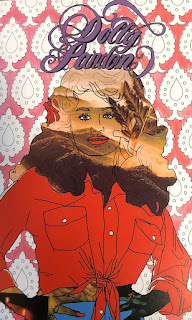
Dolly Pardon

With the embarrassing, infuriating decision by a Tennessee county school board to ban the Pulitzer Prize-winning Maus books, yet another attack on the propriety of comics as well as implicit support for fascism, I feel the need to highlight both comics and someone from this state who does a lot of good for many people, country star Dolly Parton. I just read this great anthology about her, and I think that others would also enjoy reading about various aspects of her life.

This unauthorized biography touches on so many things, including her childhood, burgeoning music career, rise to international fame, personal life, movie roles, entrepreneurship, philanthropy, and work for childhood literacy. It is a relatively quick read, but it is also simply amazing as it almost encompasses all that this woman has accomplished. I very much appreciated the straight-forward, informative, and entertaining way this book hops from topic to topic in portraying a biography. I think it would appeal to Dolly fans but also for those who have no clue about the scope and influence of her life.

This fine book was edited by Liz Yerby, with art by the Sound Grounds Wreckin' Crew, a Portland, OR based collective that includes BB Andersson, Caroline Cash, Eileen Chavez, Alecia Gatlin, Kathleen Gros, Avery Jepsen-Minyardthat , Elodie Kahler, Emily Lewis, Emily Nilsson, Samantha Szabo, Morgan Thomas, Amie Wilensky and Liz Yerby. It is amazing that so many people collaborated to make this book relatively cohesive and on point.

This comic is 52 pages long, but it contains multitudes. I have not been able to locate any reviews of it online, which is a shame because I think it deserves much more attention.

Dolly Pardon was published by Sound Grounds Wreckin’ Crew. I got my copy from Birdcage Bottom Books, and they a preview and more copies available here.

Friday, April 30, 2021

Seen: True Stories of Marginalized Trailblazers

I have noted that these days are the Golden Age of Comics, as there are so many different genres, topics, and audiences being catered to by publishers. I am surprised not only what's out there but also what I miss, which includes this relatively new series of nonfiction graphic novels aimed at upper elementary readers. Thus far, there are two books in Seen: True Stories of Marginalized Trailblazers, one published in 2020 and the other this year. I like their size, small enough to pop into a pocket, and price-point, $5.99. They also have pretty extensive teaching guides, questions, and prompts as back matter, which seems to promote these books for classroom use. "But are they any good?" you might ask. Stick around and see what I think!

The first book from this series focuses on Edmonia Lewis, an internationally-renowned sculptor of mixed heritage. She was born in upsate New York, to a Mississagua Ojibwe mother and African-American father, and she lived from 1847-1907. She learned to be an artisan from her mother's side of the family, making and selling shoes and other household items.

While contending with much adversity in terms of family tragedies, racism, and sexism, she attended school and university, both which were not really promoted for women, let alone Black women. She also ended up being trained in sculpture, though she had to travel to Italy to become established. One of her most acclaimed pieces, The Death of Cleopatra, is heavily featured here. To be honest, I had never heard of her before I read this book, and I hope it will work to make her less obscure.

This book was a collaboration between relative newcomers to the comics field, writer Jasmine Walls and artist Bex Glendining. They both speak about their work on this book in this interview.

The reviews I have read about this book have been mixed. Sara Smith wrote that she did not "feel that the creators have embraced the graphic narrative format, but that this was a more complex picture book." Jennifer Wharton wrote, "The unique subject matter, accessible art, and extensive resources for teaching in the back (they include educational standards, a multiplicity of questions on the art and subject, and educational activities) should make this a stand-out title."

Rachel Carson, the subject of the second biography in this series, was more well known to me. She was the author of Silent Spring, a book that examined the harmful effects of pesticides, and a key early figure in the environmentalist movement. She started her career as a marine biologist and writer who spent a long term at the U. S. Fish and Wildlife Service. She published multiple books about biology and the environment, and she ended up becoming a very important public intellectual who helped direct government policy. 

This book was a collaboration between writer Birdie Willis and artist Rii Abrego. In terms of comics, Willis has written a number of Over the Garden Wall stories. Abrego has drawn a number of comics for various publishers and has also drawn a graphic novel titled The Sprite and the Gardener due to be published later this year.

Most of the reviews I have read about this book have been positive. In a starred review for Booklist, Sarah Rice called it "an ideal choice for tweens and teens with an interest in science or anyone looking for an introduction to Carson." As of this review, it has a 4 (out of 5) star rating on Goodreads.

Looking at both books shows some obvious commonalities. Both extensively lean on narration and captions to convey information. At times, this makes it feel like the words are more important than the illustrations in steering the story, and that these are more picture books than graphic novels. Still, I really like the illustrations in both, and I feel that they would be engaging for younger readers.

Both books contain a lot of information, but they vary in how much they convey personality. In addition to her many accomplishments, the Rachel Carson book also pays particular attention to her lifelong relationship to Dorothy Freeman, who was her neighbor and frequent correspondent. Their friendship is a close one, which may or may not have been romantic. This book captures that ambiguity, especially in a few wordless sequences where a good deal of emotion is implied. I think this second book did a better job of depicting Carson as a person. In the Edmonia Lewis book, her playful, comedic side is described a number of times but never really shown. The different time periods and existing primary documents mean that there is only so much to draw from, and the result is that one book feels a bit more personal than the other.

Both books are pocket-sized, and relatively inexpensive for color graphic novels. They are pretty short, about 60 pages each, and with all the teaching material built into the books, I feel like these might have been published to be bought up and used as class sets. Certainly, the subjects of these books would are worthy of study, and these books would be a handy way for both students and teachers who might be unfamiliar with the format of graphic novels to get acquainted with it. I am pretty eager to see if this series continues, and who else might be featured in future volumes.

Both books were published by BOOM! Box, and they offer more info about them here and here.

Friday, February 5, 2021

When Stars Are Scattered


A finalist for the 2020 National Book Award for Young People's Literature, When Stars Are Scattered is the story of Omar Mohamed and his younger brother Hassan, two refugees from Somalia. Uprooted by war and separated from their parents, they walked a long, treacherous way to be eventually resettled in the Dadaab Refugee Camp in Kenya. They are placed in the care of a foster mother, Fatuma, an older Somalian woman whose four sons were killed. 

While in the camp, they are safe from imminent danger, but they have to deal with a number of other obstacles, like a scarcity of food, meager housing, opportunistic older kids, and a lot of waiting. They are also on a constant search for their mother, who told them to run for safety as she would follow them. In many ways they feel like they are in a prison, even though they are supposed to be free. They spend a lot of time wishing for their names to be placed on a list for interviews so they can be relocated to places like the US, Canada, or Australia, but their situation seems hopeless. Add to the mix that Hassan suffers from seizures and can only say one word ("Hooyo"), and Omar has much on his plate taking care of himself and his brother.

Omar finds refuge from many of his worries in education, and going to school is a welcome escape from his daily troubles and boredom. Encouraged by a couple of UN caseworkers, he begins to focus on his learning as a possible escape from his circumstances. Still, all of this takes a very long time, and over the years, Omar becomes frustrated and occasionally angry at his plight. 

Even from the above description, I have left out so much from this book. For instance, it also touches on many political realities like the need to educate female students and the stretched resources of the UN. It is a very well detailed account of this refugee experience, replete with lots of heartache, longing, and frustration. The characters here are fully realized, complicated people who display a range of emotions and beliefs. I can see why this book has been as honored as it has, because it is profoundly moving. I cannot recommend it highly enough.

Omar Mohamed shared his story with multi-award winning graphic novelist Victoria Jamieson, who adapted it here. He is the founder of the humanitarian organization Refugee Strong. Jamieson is a picture book creator and YA graphic novel rock star known for her books Roller Girl and All's Faire in Middle School. Both creators speak about When Stars Are Scattered in this interview.

All of the reviews I have read about this book has been glowing. Kirkus Reviews concluded their starred review, "This engaging, heartwarming story does everything one can ask of a book, and then some." Esther Keller called it "a window to a world far away" that "will allow readers to view their own lives in a very different light and hopefully allow them to understand the sorrow and heartache that are experienced all over the world." In another starred review, Publishers Weekly wrote that it is "a personal and poignant entry point for young readers trying to understand an unfair world."

When Stars Are Scattered was published by Dial Books for Young Readers, and they offer a preview and more here.

Thursday, October 15, 2020

Lon Chaney Speaks

Lon Chaney was notoriously private during his life, once even stating, "Between pictures, there is no Lon Chaney." This book, Lon Chaney Speaks, takes a shot in filling in some of the gaps about his private life, but as is written in the author's note that opens the book, it is more of a "imagined biography."

For those who don't know, Lon Chaney was an actor who began working in vaudeville, transitioned to silent movies, and finally made his speaking debut in a movie just before he died. He is renowned as "the man of 1,000 faces" for his pioneering make-up and special effects work. He was famous for portraying monsters and other gruesome creatures in his films, most notably The Hunchback of Notre Dame and The Phantom of the Opera. This book recreates movie posters for most of his films and also provides adaptations for his more famous roles. It also portrays events from his private life, including a rocky first marriage, an uneasy relationship with his son Creighton (later known as Lon Chaney, Jr.), and a happier second marriage. It also shows behind the scenes glimpses of how he slowly built his career into one of the most notable in Hollywood history.

This book is a clear labor of love that is very well researched and referenced. I adore the scenes and adaptations of the films, and the personal moments are all well staged as executed in terms of portraying strong characters and memorable events.The bold storytelling is reminiscent of the art style often employed by illustrators of the day (especially Syd Hoff), which adds to the historical tone of the story. A variety of colors are used, though each vignette is rendered mono-chromatically, which helps with shifts in time and space as well as indicates what is "real life" and what are movie scenes. I am a big fan of comics, old Hollywood movies, and monsters, so this book is right up my alley. It's gorgeous and informative, a must have for any monster or movie fans who are into comics.

This book's creator Pat Dorian is a filmmaker and cartoonist who has worked on high-profile projects for AMC and Adult Swim. He also teaches animation at the Pratt Institute. This book is his graphic novel debut, though he began the project as two mini-comics titled "Lon Chaney Talks."

All of the reviews I have read of this book have been full of praise. In a starred review, Kirkus called it a "dazzling debut" that "captures the voice and soul of Lon Chaney." Publishers Weekly called it a "spirited homage." Steven Thompson wrote, "It capsulizes his life just enough. He’s depicted as a less than perfect man, getting along as well as he can in a less than perfect world."

Lon Chaney Speaks was published by Pantheon, and they offer a preview and more here.

Wednesday, September 30, 2020

Nobody's Fool: The Life and Times of Schlitzie the Pinhead

Bill Griffith has been making comics since 1969, and he was involved in producing a number of underground comix. A few years ago he published Invisible Ink, his debut graphic novel, a history about his mother and an affair she carried on with a famous cartoonist. But he is best known for his long-running syndicated comic strip Zippy the Pinhead, with its serial title character and catchphrase, "Are we having fun yet?" This book, Nobody's Fool: The Life and Times of Schlitzie the Pinhead, is about the unlikely inspiration behind Zippy.

Schlitzie was born in 1901 and originally named Simon. He had a uniquely shaped head (the technical term for it is microcephaly) and some sort of intellectual disability. When he was 8 years old, his parents sold him to a sideshow manager, beginning a long career as a "freak" to be observed at various venues across the country as a "pinhead." He was almost always presented as a female, dressed in a muumuu or hairshirt, and attributed to either a lost civilization, like the Incas or Aztecs, or proposed to be a man/monkey hybrid. Behind the scenes, Schlitzie almost always had a pleasant disposition. His new family of fellow performers looked out for him, and he got to do things he loved, like eat hot dogs or fried chicken and wash dishes. 

Schlitzie even appeared in a couple of motion pictures, most notably the MGM-produced Freaks, directed by Tod Browning, notorious as a cult/midnight movie since its 1932 debut. A good chunk of this book deals with recreating the film and its creation in comics form. Eventually, when attitudes towards displaying disabled peoples changed, he was institutionalized, which crushed his spirits. Only a chance encounter with an off-season sword swallower made an opportunity for him to be released, which led to better circumstances until his death at age 70.
 
This book is noteworthy on three fronts. First, it is a moving portrait of a unique individual. Second, it contains a good amount of hard-won research. Certainly, not much information existed about the life of Schlitzie in any one place, and the fact that Griffith was able to cobble together so much is impressive. Third, part of this book is his story, but it also acts as a history of side shows and carnivals in the 20th century. There is so much detail in terms of the various locales, the signage at the sideshows, and specific moments. I know I was alternately charmed, moved, and surprised at what I was learning from this book. It is a clear labor of love.

All of the reviews I have read of this book have been positive. Kirkus Reviews called it "A tender biographical tribute to an artist’s inspiration." John Seven wrote, "Griffith renders the 70 years of Schlitzie’s life with a vivid affection for the areas and landscapes he inhabited, for the cultures he wandered through, and for Schlitzie himself." In a starred review, Publishers Weekly concluded, "Much like in Freaks, the revelation found in this illuminating work is that the true monsters are the 'normal' people who line up to laugh at or abuse Schlitzie."

Nobody's Fool was published by Abrams, and they offer a preview and more info about it here.
The time Schlitize met Jackie Cooper...

Tuesday, September 15, 2020

Action Presidents, Books 3 & 4

I reviewed the first two volumes in this series last year, but they have recently been re-issued in color, to coincide with these two new, full-color releases.

In that review, I wrote, "Not only do these books present distinct portraits of both men, it also situates their lives and actions in historical and governmental contexts. They are great resources for learning about the US government, policies, and laws, and I was very impressed by how many of the social studies they entailed. Also, there is also a good dose of humor throughout the volumes, embodied by the narrator, a pardoned turkey named Noah (the Historkey), and not a few fart jokes. Sometimes those instances felt a little like "sugar to make the medicine go down," but overall I feel the tone and content of these books was spot-on. I heartily recommend either (better, both!) volume to any class library."
 
I feel that the same words apply to these two new volumes in the series, but without fart jokes. But I am also more conflicted about these books, especially the fourth one, because I found some huge issues with representation, as you will read below.
As you can see, Book 3 is about Theodore Roosevelt, and it is framed by the Historkey meeting up with a couple of children who got lost on a camping expedition. The set-up helps get at some of the naturalistic aspects of the president's life. This book introduces TR as a privileged, if sickly, member of a rich and powerful family. It goes on to show how he was simultaneously an adventurer who got himself into some sticky situations (including being a rancher out west and soldier) and also accomplished a number of Progressive accomplishments, including breaking down monopolies, fighting government corruption, and establishing a number of pro-environmental policies. He also played a large part in shifting political powers to the presidency via executive orders, a legacy that lasts to present day.
There are also a number of other common stories in the mix, like the famous teddy bear episode as well as the Rough Riders and their role in battles in Cuba, which included quite a few more facts than I was familiar with. The teddy bear story ended up being a bit more gruesome than I remembered, and the Rough Riders' adventures were slightly less heroic also. So overall, I think that this portrait of TR is a fairly even-handed one, with him being cast as an unlikely hero who had some character flaws. My only quibble is a matter of representation of some peoples. I get that this books uses graphic shorthand to communicate, and I am not so sure of how well researched the garb of native peoples was, but it seemed stereotypical to me. More so with the representation of the Spanish government as a toreador.
Book 4 focuses on John F. Kennedy, and in contrast with TR, he came from a family of immigrants who fought hard to establish themselves in the USA in legal and illegal manner. The framing sequence here is of a couple of children (one apparently Pakistani and the other more a generically depicted Asian) who are isolated from the main group of children during a trip to the Kennedy Space Center because their lunches "smell weird." The theme of immigration and integration runs throughout the book, with the ethos of the USA being a place of opportunity for all being reinforced by JFK's story as a model for those two children. I don't know if I am being cynical or if I am being affected by the immense anti-immigrant agenda I see in the US government and society right now, but something about this message just seemed a bit too pat and color-blind. Like my colleague Dr. Laura Jimenez recently wrote, I expect a little more in this day and age. 
 
A lot of US history is affected by whiteness, which conveys the dominant narrative, and in hindsight I think that is a major blind-spot the books in this series books have, as well-meant as they are. Perhaps it is the perception that younger readers should be protected from these more complex, oppressive views of history, and maybe I am asking a lot of a series of books narrated by a talking turkey, but I still felt they came up short in the area of representation. 
 
This disparity really hit me in the JFK volume. The two children who are held up at the end of the book as the resilient hope for our future simply do not enjoy the same built-in advantages as the four Christian white men (Washington, Lincoln, TR, and JFK) spurring them on. I get the drive to extend from JFK's famous exhortation to "Ask not what your country can do for you...," but I also get that systemic racism goes well beyond children being mean to each other at lunchtime (though that may be a relatable and apparent symptom to younger people). This ending puts all the onus to adapt and effect change on the young people, and I think that is a huge burden that is not acknowledged. Also, it ignores the fact that it is the very system being celebrated that is doing the oppressing. Thus, the ending seems pat and disingenuous to me.
Oy.
Regarding the rest of the book, it is chock full of historical information. It offers a look at the many aspects of JFK's life and how it was affected by his father's drive to involve his children in politics, serving in Wold War II, dealing with the Cold War, getting elected to the Senate and then President, and the many conflicts he had to deal with, including those with Cuba and the Soviet Union. There is also a good bit about the Civil Rights movement of the time, with its accomplishments and accompanying violence. Ironically, all this work took place in the past and is not really explicitly tied to the present-day plight of the two children. This to me is a lost opportunity to make the connection to the ongoing battle for civil rights, implying that those battles were fought (and won) in the past. This book also gets into the Camelot period of his presidency, though it is not exalted as much as I have seen in other works. 

As you might tell by now, I was not as taken by this book as I was the others from this series. In terms of history and government, this book covers a lot of ground. In some ways, I think this left me a bit breathless, and I wonder how much context unfamiliar readers would need to deal with the text. It is an ambitious book, and perhaps that drive to do so much detracts from other areas, like the framing sequence where I feel perhaps the two children should have been a bit more fleshed out so as not to seem generic types that feed into the same sorts of stereotypes the book tries to transcend.

These books are the product of Fred Van Lente and Ryan Dunlavey, frequent collaborators who both have numerous comics credits for multiple publishers. They have collaborated on two prior historical comics projects, Action Philosophers! and The Comic Book History of Comics. Currently the duo are working on The Comic Book History of Animation, which I helped fund via their Kickstarter.

I have not been able to locate any reviews of these two books yet, but the TR one has a 3.67 (out of star rating on Goodreads, and the JFK one has a 3 star rating (as of this post).

Action Presidents! were published by Harper Collins, and there is more information about all the books in the series here.

Monday, August 10, 2020

A Fire Story

On Monday, October 9, 2017, Brian Fies and his wife Karen grabbed some things and got in their car for what they thought were precautionary measures because of wildfires. Hours later, they were homeless. 

The fires they escaped were some of the most destructive this country has ever seen, and they ravage Northern California. This book is an intimate look at lives forever changed, how people deal with large-scale destruction in terms of emotional reactions and the practical matters of dealing with relief agencies and other institutional entities. One of the parts that sticks most in my head is Fies dealing with the utilities company, whose representative keeps asking inane questions about whether workers would have clear access to the meter. "Unlimited access," he deadpanned, "but there's no gas meter there anymore." 

The wide array of emotions and somewhat surreal situations that accompany such loss make this book memorable. The personal tale packs a wallop, especially when it is accompanied by several other text pieces told from the perspective of others that the fires affected. As a whole, this book is a wonderfully detailed mosaic of the resilience of the survivors and how some begin to rebuild their lives. This book is moving and informative, giving great insight into how people cope with and survive a natural disaster.

This book's author, Brian Fies began this story as a 18-page comic he published on his blog, adapted it into a Emmy Award-winning animated short, and then expanded it into this graphic novel version. He speaks of the entire process in this video. He also speaks about sharing his story as a graphic novel in this interview. Fies is an Eisner Award winning creator who has created a couple of other graphic novels, the autobiographical Mom's Cancer and the nonfiction long-form essay Whatever Happened to the World of Tomorrow? I also had the honor of being on a panel with him at the 2019 Denver Pop Culture Con.

I was very moved and impressed by this book, but some of the reviews I have read have been more critical. Caitlin Rosberg opined, "It’s a heartfelt, emotional read that has just as much historical and social worth as it does personal value, and a reminder of the best and worst parts of what people can be." Alex Hoffman wrote, "The full book feels scattered, unable to hold the weight of Fies’ trauma." Josh Kramer thought that perhaps the book was rushed and called it "good memoir and inadequate journalism."

A Fire Story was published by Abrams, and they offer a preview and more about it here.