Showing posts with label 2020 Favorites. Show all posts

Friday, January 1, 2021

My Favorite Books of 2020

2020 has been a long, distressing, and memorable year. It was also a year full of some great comics and graphic novels, particularly nonfiction works. Check out this list of my favorites (and follow the links to the full reviews):

Favorite Book Overall

I am a sucker for an inspirational sports story, and Dragon Hoops is that, plus a personal history, plus a look at the identity politics of high school students, plus a commentary on making comics, plus a meditation on balancing your life. It's a massive, incredible work.


 Favorite Adaptation

Kurt Vonnegut is one of my favorite authors, and this adaptation of Slaughterhouse-Five uses comics in interesting and innovative ways. Most adaptations don't enhance the source material, but this one does.


Favorite Nonfiction History (Younger Readers - Not by Nathan Hale)

I have liked all the entries in the History Comics series I have read thus far, but the scope and sense of humor of this book make it exceptional. The Roanoke Colony tells the tale of Native Americans, colonial America, a doomed colony, British royal politics, and pirates. I learned so much from reading it and had fun doing so, too. (Queen Elizabeth I brushed her teeth with honey, can you believe it? Disgusting!)


Favorite Nonfiction History (Younger Readers - by Nathan Hale)  

Nathan Hale makes the best history comics, so he gets his own category. Blades of Freedom, the tenth(!) entry in his Hazardous Tales series, shows just how fresh and interesting his work still is while covering a topic (the slave revolt in Haiti) that unravels a complicated web of 18th century US and European history. Another book that opened my eyes to a topic I was sadly ignorant about.


 Favorite Nonfiction (Older Readers)

Kent State is well-researched, based on lots of original documents, interviews, and oral accounts of the massacre of student protestors in 1970. It is a book that highlights the victims who died, showing their humanity while also exposing a system of paranoia and prejudice that sadly persists today.


 Favorite Fictional Biography

Not much is known about the private live of this pivotal actor, but Lon Chaney Speaks pieces together a compelling narrative that melds vaudeville, silent movies, the early days of Hollywood, and plenty of monster movie special effects. The artwork perfectly captures the time period while recreating the movies and movie posters of the day.


 Favorite Superhero Biography

I know that Jack Kirby is not technically a superhero, but he created enough of them in his lifetime that I am counting him as one. I loved this biography that covers his lifespan and accomplishments in a style very similar to his own. The artwork is bombastic, quite fitting for the "King of Comics."


 Favorite Superhero Book

One of the highlights of my year was getting to talk with Gene Luen Yang about Superman Smashes the Klan. Even if I had not talked to him, I would rate this work very highly. Based on a serialized radio show from 1946, this book modernizes the tale and hits on the best aspects of the classic superhero while also commenting on racism and the resilience of immigrants.


 Favorite Series for Younger Readers 

There are two books in the Investigators series so far, and my oldest child has read them with me multiple times. It's full of puns, cheesy jokes, and inventive mash-ups of characters (including a radioactive bakery-based villain named Cracker-dile, a plumber who literally has a snake for an arm, and a doctor who turns into a news copter when anything news-worthy occurs around him). Fun and addictive!


Funniest Book, AKA Best Book Featuring Guys in Bear Outfits

Eddie's Week begins with the main character having an inmate (complete with cell) installed in his living room and just gets weirder and more surreal from there. It's a unique and darkly funny book that speaks about modern life wile containing some madcap adventures.


 Favorite YA Book

A beautifully told and illustrated book, The Magic Fish speaks to the power of stories to convey meaning and build brides that cross time and culture. The main character Tiến is one of the sweetest and most sympathetic protagonists, and his struggles with coming out to his parents gnaw at him. The ending left me tingling.


 Favorite YA Biography
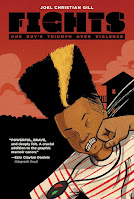
Even though I come from a very different background than Joel Christian Gill, I found much to relate to in this autobiography. Fights chronicles a rough childhood where he had to learn to take up for himself, often in physical ways. It's a heart-rending and inspirational work that captures the confusion and ambiguities of childhood.


OK, that's my list. Happy 2021!

Wednesday, December 30, 2020

Kent State: Four Dead in Ohio

My Friend Dahmer is one of my all-time favorite graphic novels, a dark exploration of high school friendships and the many issues that underlie people's lives, which in the case of Jeffrey Dahmer resulted in horrific murder and mayhem. Derf Backderf's combination of autobiography and journalism made for a highly nuanced and haunting book that has stayed with me for years. Kent State: Four Dead in Ohio has a bit of autobiography at its beginning, when young Derf saw the National Guard rolling through his town on the way to Kent State, but its strength lies in its exhaustive research. This book focuses specifically on the four young people who died in the May 4 Massacre in 1970, putting a human face on history. Over the course of the book, I got to know these people, their friends, and their aspirations, and so when the gruesome events take place toward the end of the book, they feel even more tragic and pointless.

This book meticulously recounts the event that lead up to the massacre, and it is structured in four chapters to correspond to the first four days of that May. Piece by piece fall into place, from the "law and order" governor trying to show just how strong he is during an election year to the paranoid, draconian military leaders who headed the National Guard contingents to the exhausted and misinformed troops themselves. In hindsight, the massacre is made to look like a perfect storm, complete with misinformation, wild and untrue accusations made against the student protestors, and a culture war between liberal and conservation factions. The military action comes to be, ironically, as a result the fomenting protests against the increasingly unpopular and cruel military actions in Vietnam. 

What is most informative and distressing about this book is the role that manipulating media and casting political aspersions played in the National Guard's actions, which is mirrored by contemporary protests and police brutality in Portland and other places. Acerbating the situation, government agencies and police planted spies and moles to make the protestors appear much more violent and extremist, just like today. The violent factions within the protestors are a minority, and do not reflect the whole, but they are attributed all sorts of (non-existent) power and agency. Rampant rumors among the local population and military/community leadership paint the students as communists and radicals. They say that the students have snipers and stockpiles of weapons. They dehumanize the students and their demands. It is depressing to see how much things have not really changed and how short we have come in the 50 years since these events took place. 

Spoiler: The bad guys win and suffer no consequences.

I was impressed by just how much this book does. It portrays a set of individual portraits of the students, a history of the campus, and an account of the state of politics of the time on a city, state, and national level. There is a lot of information in this book, and most of it is presented in incredibly artful manner. There are a few pages that are text-heavy and more expository, but none of it is off-putting. And the pacing of the last chapter, where the shootings occur is paced to highlight its brutal, oppressive, and unjust aspects, is a clinic in storytelling an action sequence. The illustrations map not just the place but also the people and events in a visceral and incredibly moving fashion.

Reading this book, I could not help but also think of Big Black: Stand at Attica, which recounts events that happened at a prison uprising a year later, events referenced in this book's epilogue. Great books use history to illuminate the present, and that is exactly what Kent State does. Certainly it comes from a particular political viewpoint, but it is backed by a vast amount of research and personal accounts. And the facts (those that have not been obfuscated and lost) point to terrible and avoidable injustice and murder. Derf has crafted another masterpiece graphic novel.

In addition to the multiple award-winning My Friend Dahmer, Derf Backderf is also known for his long running alt-comic The City as well the graphic novel Trashed, about his time as a garbage collector. He speaks extensive about his work on Kent State in this interview.

All the reviews I have read of this book have praised it. It has received multiple starred reviews. The one from Publishers Weekly called it an "expertly crafted chronicle of this defining moment in U.S. history" that also "serves as a deeply moving elegy for the victims." The one from Kirkus Reviews concluded, "Backderf’s vivid, evocative book does a splendid job of keeping their memories alive." Leonard Pierce wrote, "By buying into the details so heavily, he makes a story that means something more today – and serves as a warning as we see the story repeated, again and again, every day, always as tragedy."

Kent State: Four Dead in Ohio was published by Abrams Books, and they offer a preview and more here.

Friday, December 25, 2020

Eddie's Week

One of the highlights of every year for me has been the chance to go to HeroesCon in Charlotte to be a geek for a weekend, reconnect with friends, and check out a lot of excellent comics. Because of the birth of a child, I did not attend in 2019, and the 2020 con was cancelled because of COVID-19, so I have not been in a couple of years. But when I've been there I usually spend a good chunk of time hanging out with the author of Eddie's Week, Patrick Dean. Patrick lives near Athens, GA, and his strip Big Deal Comics was a fixture of the weekly Flagpole magazine. It was a weird, random, and hilarious comic where anything could and did happen, usually involving a ghost or a werewolf. During my time in Athens I got to know Patrick, too, through some mutual friends, and he is one of the kindest, sweetest, and funniest guys I know. His love for zany, old comics is palpable, as is his enthusiasm for making fun, inventive, and funny comics. Patrick was diagnosed with ALS in 2017, and he has not stopped drawing and fighting the good fight any way he can. His candor and dignity facing an impending decline has been inspirational and difficult to observe, though I admire his courage and marvel at the outpouring of love he has inspired from his friends and family.

Eddie's Week is the manifestation of all Patrick's attributes and abilities. Even ignoring the fact that the main character bears a strong resemblance to the author, reading this book feels like time well spent hanging out with my friend. This book's main character, Eddie Lubomir has a week off of work, which he intends to spend at home, watching cheesy movies and reading paperback novels. His plan gets complicated when he gets selected to take part in the Stay At Home Warden Project (S.A.H.W.P.) and has an inmate (complete with cell and nutritive food pellets) installed in his living room.

"The Backstabber" makes for interesting company, but Eddie's life becomes further complicated when he escapes. From there, Eddie runs into all sorts of strange characters, including a men's group who dress in bear suits, party magicians, a witch, vampire cops, and one very determined private investigator. The city of Tragoston is a weird and dark place. Every character in the book is vibrant and memorable, from the single-minded, oblivious head of S.A.H.W.P. to Eddie's ex-girlfriend Claire, who just can't seem to stay out of his business for too long.

What makes this book really work is its idiosyncratic sense of humor. This world is one parallel to ours, replete with a menagerie of supernatural characters that act in mundane, grounded ways. The surreal nature of the plot and characters has the net effect of a grim sort of humor, a world where magic is possible and always at war with the random caprice of bureaucracy. This book is unique, personal, and hilarious in parts, commenting on the stultifying aspects of the "real world" but finding solace in unexpected relationships. The situations that Eddie finds himself in are madcap but also realistic in their impact, which makes this comic a singular reading experience. I really felt for Eddie as he went through his travails, although I also found myself fascinated by and laughing at all the nutjobs in his life. This book is original, gripping, and invigorating.

The reviews I've read of this book have been celebratory. Publishers Weekly concluded, "Though the leap from oddball nightmare into straight magic takes proceedings in an unexpected direction, for the most part Dean delivers a winningly comedic scenario. The result runs like Kafka as interpreted by the Three Stooges." Eleanor Davis wrote, "I’ve laughed loud and hard every time I’ve read it, and I’ve read it four times – and I love how the big weird mess of a plot somehow, against all odds, brings all its threads together like some sort of magic trick." Patrick speaks more about his work on this book in this interview.

Eddie's Week was published by Birdcage Bottom Books, and they offer a preview and more here


Thursday, December 10, 2020

The Magic Fish

The Magic Fish is a gorgeous and touching book that melds together contemporary life with fairy tales. Its main character is Tiến, a teenage boy who struggles with a number of identity issues. His parents are Vietnamese, immigrants who fled a tyrannical situation and who have been separated from their family.

Tiến tries to bridge a language gap with them (particularly his mother) by sharing stories, fairy tales that transcend culture.  Over the course of this book, there are three tales told, versions of Cinderella, the Little Mermaid, and the Magic Fish, and they are told by three different people, which speaks to how people use story to both communicate and cope with difficult circumstances.

At school, Tiến tries to fit in with his friends and wants nice clothes to go to a school dance, but he also knows that his family's financial circumstances mean that he has to make do with his mom's sewing. Also, he's gay and is looking for ways to come out to his friends and family. He is horrified when he does research and learns that there is no word in Vietnamese for gay, imaging the cultural implications of that idea. And matters are further complicated when a teacher tries to help him by referring him to a priest.

This book works in so many ways because it beautifully plugs readers into immediate experiences. Tiến is drawn to seem small and vulnerable, with his large, round eyeglasses, but he proves to be strong and resilient over the course of the book. When fairy tales are recounted, the drawings and colors become colorful and grandiose. There are exquisite gowns, stars, and sparkles that make things appropriately otherworldly. 

But in between this space of vulnerability/pain and magic/wonder, the characters communicate profound ideas and share feelings in a spectacular and unexpected fashion. This book is beautiful to behold in terms of artwork, but its plot is also splendidly moving, a tribute to the redemptive power of narrative. Its ending left me tingling.

This book's creator Trung Le Nguyen is also known as Trungles. The Magic Fish is his debut graphic novel, but he has drawn a number of fairy tale and romance comics for anthologies published by Oni Press, Boom! Studios, and Image Comics. He speaks about his work in this interview.

All the reviews I've read of this book have been glowing. Avery Kaplan wrote, "The Magic Fish is a book that exists between two points: fairy tales and personal experiences, Vietnam and the United States, mother and child, words and pictures, signifier and signified. It incorporates all of these elements into its whole, and rather than diminish any of them, the ultimate effect is to amplify them all." Kirkus Reviews gave it a starred review that concluded, "Beautifully illustrates how sharing old stories can be the best way to learn how to share new ones." Amanda MacGregor called it "beautiful and moving," adding, "this book will stick with me."

The Magic Fish was published by Random House Graphic, and they offer more info about it here.

Monday, November 30, 2020

Blades of Freedom: A Tale of Haiti, Napoleon, and the Louisiana Purchase

I have a lot of books on my to-read list, but I got this one in the mail the other day and it jumped to the top of the heap. I have reviewed every volume of Nathan Hale's Hazardous Tales on this blog (click the link and see!), because I think it's the best nonfiction history series available in graphic novel form. Each book has been excellent, full of well researched facts and events and told in a highly engaging, sometimes humorous way. It's one of the series I recommend most to tween and adolescent readers who have an interest in nonfiction. Blades of Freedom is the tenth book in the series, and it is phenomenal.

Bookended with a look at the Louisiana Purchase, it runs far and wide filling in the context for that pivotal happening. Over the course of this book, I read about how mosquitoes spread Yellow Fever, Columbus decimated the Taino people, vodou arose as a religion, Napoleon rose from being a Corsican to the Emperor of France, and Haiti became the first country in the Americas to abolish slavery. It's a book about the politics of the day, moving from monarchies to revolutionary times, using the French Revolution as a backdrop for much of went on. It explains how the slave trade work in gruesome detail, focusing on the value of sugar cane as a product of the Caribbean islands. It also focuses on major figures involved, including Napoleon, legendary insurgent Mackandal, rebel general Toussaint L'Ouverture, Emperor of Haiti Jean-Jacques Dessalines, and eventual US President James Monroe


It manages to cover so many topics with a clever conceit: the narrator Nathan Hale has a wheel he spins to jump from topic to topic. This set-up keeps the narrative moving at a brisk pace without being overwhelming. It also sets up a context for building so much of the background necessary to understand these historical events. Personally, I knew little about the Haitian Revolution before I read this book, and after having read it I felt ashamed not to have known more about this landmark struggle. It was the largest and most successful slave revolt ever, and one of the big pluses of this book that it sheds light on a topic that I think gets short-shrift in terms of learning about history in the US. I think the lack of coverage is racist, with the long-held use of the Haitian Revolution being used as a specter to scare white people about the potential savagery of free black people. Having this matter being portrayed in such a popular series will mean that it won't be as arcane a topic going forward, I hope.

This book's author, Nathan Hale, who is not related to the Revolutionary War spy, is a highly accomplished graphic novelist. Aside from his great success with this series, he has also published a couple of fictional graphic novels One Trick Pony and Apocalypse Taco. He has also drawn a few others, including Rapunzel's Revenge and Calamity Jack.

Thus far, I have not been able to locate many reviews of this book, but the ones I've seen have been positive. Marissa Moss wrote, "This is the kind of history that will excite young readers and show them how disparate events, far from each other in time and space, can have major impacts on each other." Lori Henderson listed it as a weekly pick for Good Comics for Kids.

Blades of Freedom was published by Amulet Books, and they offer a preview and more here.

Thursday, November 5, 2020

Slaughterhouse-Five: A Graphic Novel Adaptation

I should preface this review by stating that Kurt Vonnegut is one of my favorite authors ever. I have read every one of his novels, checked out many of his nonfiction essays, and laughed at his cameo in Back to School countless times. One of the high points of my college career was getting to hear him speak my freshman year. So, to say that I have high expectations for this book is a bit of an understatement. Beyond my own background, some of the weight of my expectations also lay in this book partly being adapted by writer Ryan North, a brilliant comics creator/humorist responsible for some of my favorite works, namely Dinosaur Comics, Jughead, and The Unbeatable Squirrel Girl

For those who have not read the original novel, Slaughterhouse-Five is about a man named Billy Pilgrim who becomes "unstuck in time."  Throughout the novel he bounces back and forth across his own timeline, witnessing his death, marriage, experiences in World War II, abduction by aliens who placed him in an interstellar zoo, and meetings with literary hero Kilgore Trout, among other things. As a result, he takes a unique view of humanity, forming opinions about the capriciousness of war and societal values.

As you can see from the excerpt above, which opens the book, this adaptation takes advantage of its medium in ways that enrich this reading experience. The tweaks firmly entrench the book in its own historical context as well as the medium of comics, and they are done in very smart ways. This book uses some of the unique features of comics to recast and retell portions of the novel to convey its spirit without being a strictly literal adaptation. For instance, using panels to play with time and imagination:

Or changing into a newspaper comics format to give short bursts of back story:

As you can see, it is almost as if this story was originally conceived to work as a graphic novel. Like its source material, this book is full of pathos, laughs, and dark observations about humanity. It's a witty, fantastically moving, and trenchant book. This adaptation is one of the best I've seen, in any medium, as much a classic as its source material. Perhaps this is faint praise, because most graphic novel adaptations do not take advantage of the affordances the medium allows. I wish I was not so surprised that reading an adaptation of a novel that hinges on continual shifts in time and space in a medium (comics) that constantly manipulates time and space is an excellent experience as this one. I feel that many creators, certainly not most literary adapters, do not take as much advantage as the medium as these ones do.

That the creators of this book have many years of comics experience under their belts should come as no surprise. North has won multiple Eisner and Harvey Awards for his work on Adventure Time comics, The Unbeatable Squirrel Girl, and Jughead. Artist Albert Monteys was art director of the Spanish satirical magazine El Jueves from 2006-2011 and also created the Eisner Award nominated science fiction series Universe! Both creators speak about their work on this adaptation in this interview, and Monteys shares his take in this interview.

All of the reviews I have read about this book have been raves. In a starred review from Library Journal Tom Batten praised it as "the best, and most effective, graphic novel adaptation of a literary novel in recent memory." In another starred review, Publishers Weekly called it "a rare graphic adaptation that enriches a literary classic." David Weber called it "a perfect graphic novel adaptation" as well as "an absolute joy to read."

Slaughterhouse-Five was published by Archaia, and they offer more info about it here.

Thursday, October 15, 2020

Lon Chaney Speaks

Lon Chaney was notoriously private during his life, once even stating, "Between pictures, there is no Lon Chaney." This book, Lon Chaney Speaks, takes a shot in filling in some of the gaps about his private life, but as is written in the author's note that opens the book, it is more of a "imagined biography."

For those who don't know, Lon Chaney was an actor who began working in vaudeville, transitioned to silent movies, and finally made his speaking debut in a movie just before he died. He is renowned as "the man of 1,000 faces" for his pioneering make-up and special effects work. He was famous for portraying monsters and other gruesome creatures in his films, most notably The Hunchback of Notre Dame and The Phantom of the Opera. This book recreates movie posters for most of his films and also provides adaptations for his more famous roles. It also portrays events from his private life, including a rocky first marriage, an uneasy relationship with his son Creighton (later known as Lon Chaney, Jr.), and a happier second marriage. It also shows behind the scenes glimpses of how he slowly built his career into one of the most notable in Hollywood history.

This book is a clear labor of love that is very well researched and referenced. I adore the scenes and adaptations of the films, and the personal moments are all well staged as executed in terms of portraying strong characters and memorable events.The bold storytelling is reminiscent of the art style often employed by illustrators of the day (especially Syd Hoff), which adds to the historical tone of the story. A variety of colors are used, though each vignette is rendered mono-chromatically, which helps with shifts in time and space as well as indicates what is "real life" and what are movie scenes. I am a big fan of comics, old Hollywood movies, and monsters, so this book is right up my alley. It's gorgeous and informative, a must have for any monster or movie fans who are into comics.

This book's creator Pat Dorian is a filmmaker and cartoonist who has worked on high-profile projects for AMC and Adult Swim. He also teaches animation at the Pratt Institute. This book is his graphic novel debut, though he began the project as two mini-comics titled "Lon Chaney Talks."

All of the reviews I have read of this book have been full of praise. In a starred review, Kirkus called it a "dazzling debut" that "captures the voice and soul of Lon Chaney." Publishers Weekly called it a "spirited homage." Steven Thompson wrote, "It capsulizes his life just enough. He’s depicted as a less than perfect man, getting along as well as he can in a less than perfect world."

Lon Chaney Speaks was published by Pantheon, and they offer a preview and more here.

Friday, September 25, 2020

Dragon Hoops

If you have been reading graphic novels (or this blog) for any length of time, you are probably familiar with this book's author Gene Leun Yang. He is one of the premier comics creators working today and a former National Ambassador for Young People's Literature. Additionally, he was awarded a MacArthur Fellowship and has also won the Printz Award for his graphic novel American Born Chinese. He also has won multiple Eisner Awards. He has explored themes of immigration, belief, identity, and growing up in his many works, including The Eternal Smile, Level Up, The Shadow Hero, the twin volumes Boxers & Saints, and New Superman. And (fun fact), I'll be talking with him this week about Superman Smashes the Klan.
 
The work on hand here, Dragon Hoops, is a rather personal one, about the 2014-2015 Bishop O'Dowd High School basketball team and their march toward a state championship. At the point of this story, Yang had worked at the school for 17 years but was not really much of a sports fan. Part of what drew him to the tale was the fact that the school had made the championship game before and was 0-8. Coach Lou Richie was an alum who played in one of those games and had coached teams in a few more, so his deep involvement and passion are palpable. Further, Yang was fascinated by the collection of players, a diverse set of high school boys with different viewpoints and goals, and how they came together as a team. So, there are lots of people to root for and engage with in this book. As a slight spoiler, Yang becomes a sports fan at the end of the book.

He does a superb job of tackling individual games and the drama they contain. His storytelling in these instances is as powerful as any sports narrative I've read or seen. But this book goes beyond the games. It lets us get to know the students (at least the ones who let Yang get to know them). It shows a side of what being a student athlete entails, with a nuanced exploration of race in multiple arenas. It also dives deep into history, giving background on the school, Catholic schools in general, and the history of basketball going back to Dr. Naismith. The coloring by Lark Pien further makes the games dynamic but also elucidates the many facets of the story. The work on this book is clearly extensive and beautifully presented.

Pushing beyond the boundaries of the sports narrative is a long thread of Yang making explicit that this book is a comic that he is composing. As such, it is full of omissions, biases, and intentional choices to force a certain type of narrative on the proceedings. It is fascinating to see him struggle with the decision to include Coach Phelps, a legendary figure at the school, because of unsettled allegations of sexual misconduct. It is also interesting to see him wrestle with two large decisions, one of whether to quit teaching and focus on creating comics full-time, the other whether or not to accept the position to write Superman for DC Comics, which is a lifelong dream. I also liked some of the metanarrative flourishes, such as when he discusses the specific ways that a student-athlete wants his hair to be depicted, with the conversation literally drawing out his options. This book is clever and self-aware, as much a meditation on the creative process as it is a product of said process.

I can say with authority that this book offers much to a wide array of readers, whether they are sports fans or not. It is a long book but so compelling that I devoured it. Giving more insight into potential audience, reviewer Esther Keller opined, "I think the storytelling style is a bit sophisticated and better suited to high school students, but some middle school kids, especially those into basketball, can and will enjoy the story."

The reviews I have read about this book have been glowing. Michelle Falter wrote, "I love how this book is a sports novel about a coach and his team trying to win State for the first time, but also it delves into so so so much more. It deals with everything from fitting in, microaggressions and racism, to self-doubt and taking chances." In a starred review, Publishers Weekly concluded, "Using a candid narrative and signature illustrations that effectively and dynamically bring the fast-paced games to life, Yang has crafted a triumphant, telescopic graphic memoir that explores the effects of legacy and the power of taking a single first step, no matter the outcome." Jerry Craft wrote, "Framed from the start as a book about the struggle to create a book, Dragon Hoops animates the inner conflict between Gene Yang, computer science teacher; Gene Yang, family man (his wife and four children appear throughout); and Gene Luen Yang, graphic novelist. Is it possible to do all these things simultaneously without literally being Superman?" Kirkus Reviews wrote, "This creative combination of memoir and reportage elicits questions of storytelling, memory, and creative liberty as well as addressing issues of equity and race."

Dragon Hoops was published by First Second, and they offer a preview and more information about it here.

Sunday, September 20, 2020

Investigators

As a professor at UTK and a grad of UGA, I have an antipathy for gators. But Investigators is utterly charming and hilarious, and 5-year-old is currently obsessed with it to boot. It stars two gators named Mango and Brash who are agents of Special Undercover Investigation Teams (SUIT). You can tell them apart by their jawlines and coloring. Mango's jaw is round and he is dark green, while Brash is lighter green and has a square jaw. Clad in their high-tech Very Exciting Spy Technology (VEST), they go into action to solve some extraordinary cases. In this book they are trying locate a famous cupcake baker named Gustavo Mustachio, who has gone missing for two weeks, and suspect foul play. 

Also, they want to foil a villain who has stolen a device that digitizes physical money and automatically deposits it electronically. It even works through walls, which makes it especially harmful. It might not be so much a spoiler that these two cases eventually intersect.

As you might tell from the names of devices and agencies, this book is full of puns, and Mango is very fond of them, too. The back and forth conversations and sound effects are frequently funny. This book is also full of pop culture references and snappy dialogue, and the sum of all these things makes it a fun book to read aloud. There is also some potty humor, as the agents' main mode of transportation is flushing themselves down into sewers.

Adding to the fun visually is a wild array of characters and character designs. There is a triceratops escape artist named Houdino. There is a villainous crocodile who is part baked good named Crackerdile. There is a giant chicken who is also a scientist/inventor named Dr. Doodledoo. There is also Doctor Copter, a brain surgeon who was bitten by a rabid helicopter and who is compelled to transform into a helicopter to cover anything especially newsworthy. There is lots of whimsy and invention at play in this book, and my 5-year-old is really taken by this motley assortment of characters. He especially wants to read and re-read the chapters that tell Dr. Copter and Crackerdile's origin stories.

The end-papers also have a few bonus features, including a guide on how to draw the main characters, which my son is very into. Altogether, this book has lots to offer in terms of readers young and old. It is fun to read together. It has vibrant, unique characters. The plot is off-the-wall and the dialogue laugh-out-loud funny. It truly is a great graphic novel for all ages, which is a pretty hard trick to pull off.

This book was created by John Patrick Green. I enjoyed his first graphic novel Hippopatomister, and he has also drawn a number of other books for children as well as the mini-comic Teen Boat! written by Dave Roman. He speaks about the origins of the Investigators series in this interview.

All of the reviews I have read of this book have been positive. Kirkus Reviews concluded that it was "silly and inventive fast-paced fun." Publishers Weekly called it "fast-paced fun for the bad pun and dorky joke crowd: 'Now let’s flush ourselves down the nearest toilet and GATER DONE!'" Kate Quealy-Gainer wrote, "While the art is a bit more sophisticated than Pilkey’s Dogman, the tone is the same, and those waiting for the next installment of that series may want to spend time with this weird reptilian pair."

Investigators was published by First Second, and they offer a preview and more here. A sequel is due to be published at the end of the month.

Saturday, September 5, 2020

History Comics

Apparently, the fine folks at First Second have found a lot of success in their Science Comics series and have branched out into other areas. That series has been of overall high quality, and I have high expectations for whatever they publish. Their first other series is Maker Comics, which is sort of a practical extension of the SC series, with titles about fixing cars, baking, and building robots. I reviewed one title here, and I was pretty impressed with it. More recently, they also branched out with a series aimed at social studies topics, History Comics. They have two titles out so far, and I review them below.

The first book I read was The Great Chicago Fire: Rising from the Ashes, which is about the huge 1871 blaze that destroyed a huge section of The Windy City. This book makes the events here very personal, following a couple of siblings Franny and J.P. who live nearby where the fire started and have to traverse the city in order to avoid the flames. They are great point-of-view characters who both narrate historical/geographic information and also put a human face on the goings-on.


This book gets into all sorts of issues, including the prejudice against immigrants and how the legend was created that blamed Mrs. O'Leary (and her cow) as the cause of the fire. Attention is also paid to the urban planning (or lack thereof) at the time and how the city was rebuilt in the aftermath of the fire, with the advent of skyscrapers and other technological innovations. All of these were showcased 22 years later at the 1893 World's Colombian Exposition.

The end of the book is rounded out with some nifty features, like a timeline of events, a list of facts about the Chicago Fire, and a map of relevant historical sites to visit today. I really enjoyed reading this book, and I feel it's a good, highly accessible introduction to the series.

It was written by Kate Hannigan, a former journalist who has written a number of middle grades and picture books, including the multiple award-winning The Detective's Assistant. It was illustrated by Alexandra Gaudins, who also drew The Brain entry of Science Comics as well as a number of digital and webcomics.

All the reviews I have read of this book have been positive. Esther Keller wrote, "The fast-paced read is highlighted with superb artwork that evokes the time period and gives readers the feeling of chaos that ensued in Chicago." Kirkus Reviews concluded, "A fictive plotline adds a strong “you are there” feel to this informative account."

The second book I read was The Roanoke Colony: America's First Mystery, which is about the first attempts of the British to establish a permanent colony in North America. It is narrated by Wanchese and Manteo, two indigenous leaders that the English encountered. They offer a good contrast with their viewpoints, as in reality Wanchese was more weary of the British and their intentions. Both also traveled to England, and Manteo was the first Native American to be baptized into the Church of England


This book is more packed with information, and it gives a broad context to the times and geography. It tells of the various indigenous nations that were active in the area, along with their political structures, homes, and tools. It sheds extensive light on the British politics of the day, with particular attention to Queen Elizabeth I (who brushed her teeth with honey-!!!), "debonair hot boy" Sir Walter Raleigh, and pilot/pirate Simon Fernandes. It chronicles conflicts with rival European nations and also pirates. The failure of this colony lie in a great number of factors, including colonial cluelessness, skirmishes with local peoples, lack of supplies, improper training of colonists, needlessly cruel leadership, and privileging capitalist interests over people's general safety. I was impressed by how much nuance and detail is packed into this book with it still being so accessible and engaging.

This book does not have the same features that concluded The Great Chicago Fire, but I also feel that it covers lot more content in terms of historical context and complexity. Instead it ends with possible solutions to the mystery of what happened to this "lost colony" that was left to its own devices for months. These final pages offer a number of possibilities, starting with the evidence that they literally left a note on a tree that they had gone to the island of Croatoan (where Manteo was from) but storms complicated any search efforts. Among these possible endings are that the colonists may have been slaughtered by any number of factions, including natives or the Spanish, abducted by aliens(!), or assimilated into local nations. Reading this book, it is easy to see why this mystery is still so compelling, especially when presented in such a well-researched manner.

The creator behind this book is Chris Schweizer, who also made the volume of Maker Comics I just reviewed. Like I wrote then, he is a comics Renaissance man who has created a few series like the Crogan's Adventures and The Creeps. He has a bent toward historical works and is one of the best artists working right now, IMHO.

I have not found as many reviews of this book online, but the ones I have read have been full of praise. Carin Siegfried wrote that it "was a lot of fun, really informative, and I especially liked how the story was told from the perspectives of the Native Americans." As of this writing, it has a 4.14 (out of 5) star rating at Goodreads.

Both of these volumes of History Comics were published by First Second, and they offer more info about them and future volumes in the series here.

Wednesday, July 15, 2020

Jack Kirby: The Epic Life of the King of Comics

Captain America. The X-Men. Hulk. Iron Man. The Avengers. The New Gods. Black Panther. These are only a few of the hundreds of characters that Jack Kirby either created or co-created. They are household names and properties that have generated billions (trillions?) of dollars for the corporations that control them. But he received close to none of such profits. In terms of industry folks, most artists and creators revere Kirby as one of the all-time greats, but non-comics people tend to not know who he was and attribute all of his creations to his frequent collaborator Stan Lee. Finally here, he is given a full biography, in graphic novel form.

Jack Kirby: The Epic Life of the King of Comics tells his whole life story, from his early days as a hard-scrabble New Yorker to his becoming an artist and taking part in the formative years of the comic book industry. He was friends/associates with many of the people who shaped American comics, like Bob Kane, Will Eisner, and Joe Simon. He bounced around several companies, enlisted and served in the Army during World War II, co-invented the genre of Romance Comics, co-created the Marvel Universe as we know it, and went on later in life to work in animation. His was an eventful life, and this book captures it in a mostly realistic, painterly style that evokes the spirit of Golden Age comics as well as documentaries. Also, the paper itself is colored to resemble yellowed newsprint, the material used to display Kirby's works.
I have to say that this book moves at breakneck speed, and it is packed full of his accomplishments. There is a part of me that wanted there to be more breaks, perhaps in the form of chapters or parts, but I also feel that the sort of compressed storytelling at play here is more emblematic of Kirby's work. So the medium very well matches its subject, though I also made myself pause at times to catch my breath and take in the story.

I also appreciated the way the book used Kirby as the primary narrator (using various interviews and articles as reference points) with occasional shifts of POV to his wife Roz and collaborator Stan Lee. I'd say it does a good job at capturing the spirit and voice of the man, and I liked how it treated him in very practical terms, with his speaking to the need to be productive and work not only in terms of expressing himself but also to put food on the table and support his growing family. Certainly Kirby was an impressive creator, but this books demystifies some of the origins of his most famous works, showing how he cobbled together his experiences, learning, and media consumption in spinning his fantastic stories and amazing characters. Kirby is impressively human.

This book also touches on the more controversial aspects of Kirby's life, namely how he was cheated out of his due as a creator and spent much of his life battling in vain to retain control of his stories, characters, and artwork. Surely there is lots of blame to assign for his treatment, and I felt this book captured well the conditions that led to it. It also has lots of source material behind it to help flesh out the proceedings well.

In seeing people's responses to this book online, the most glaring aspect people have latched onto is the depiction of Kirby himself, which you can see from the cover image. While everyone else is realistically drawn, Kirby is rendered in a cartoonish way, with a huge head and big eyes. I think this choice does two things: it draws attention to him in every way as an otherworldly presence, and it makes it clear who he is in every instance, making for smoother storytelling. Others have noted how this choice is related to how another comics titan Osamu Tezuka (the "God of Manga") drew himself in his own works, and I feel that there is a similar semiotic move made here, a marker of a similarly legendary figure. In reading the book, I have to say that I did not find the choice jarring in the least, and I was quickly drawn into the narrative flow of the story. Even though I was very familiar with many aspects of his life, I still found this book fresh and vibrant. And I feel it is extremely important now, especially as an introduction to those who are unaware of just how impactful Kirby's life was.

This book was created by long-time Jack Kirby fan Tom Scioli. His own works clearly owe debts to Kirby in terms of style, particularly his series Gødland and American Barbarian, not to mention his recent Fantastic Four: Grand Design limited series. He has also drawn a number of licensed properties, including Transformers Vs. G.I. Joe. Scioli speaks about his work on this book in this interview. For more about his entire career, check out this interview with TCJ.

All of the reviews I have read about this book have sung its praises. In a starred review Publishers Weekly called it "a must-read for Kirby fans, and beyond—it captures the mythos of the of the 20th century comic industry’s golden age."  Kirkus Reviews summed it up as "a fast-paced celebration of an underheralded legend within the comic-book industry." Steven Thompson wrote, "The public deserves to know Kirby’s story and Tom Scioli, the obsessive Kirby fan/writer/artist, tells it here in a way I can’t help but think the King himself would’ve liked, and in the medium Jack Kirby loved."

Jack Kirby: The Epic Life of the King of Comics was published by Ten Speed Press, and they offer a preview and more here.
Kirby's influence extends way beyond comics.

Thursday, February 20, 2020

Fights: One Boy's Triumph Over Violence

I have read most of the books published by Joel Christian Gill, such as his Strange Fruit anthologies and Tales of the Talented Tenth series. Those have been nonfiction histories, but in Fights he turns to a more personal topic, a memoir about his own childhood. With his mother being incarcerated when he was very young and her not always being able to provide a stable environment for him after the death of his father, Gill got bounced around to live with various family friends and relatives, with varying amounts of supervision and support.

Also, sometimes those places brought other sorts of violence or abuse that he had to contend with. As a consequence he learned early on that he had to rely on himself for many things and also that meant he had to learn to fight. There are many commonplace adversaries along the way: bullies on the school bus, racist jerks who try to shake him down for money, and rivals who want to maintain their reputations and protect their turf. Gill has to deal with a lot of adversity to try to fit in and also carve some space for himself. It seems that he always has to be on the offensive and can never really relax his guard.

It is easy to read this book and feel for his plight, but it is also difficult to suffer the depravities he experienced. The artwork portrays this sense of ambivalence about childhood, drawn in the same accessible, clear, and picture-book manner as his other works. It is jarring to see "cute" figures as they navigate serious issues such as blatant discrimination, sexual abuse, and physical violence, but it is also emblematic of the sorts of circumstances many young people experience. It impresses the point that many of these situations force children to have to grow up well before they should, but at the same time they are still children. It makes the proceedings that much more distressing. I applaud the braveness here in candidly portraying such personal trauma and how he learned to cope.

One of the most powerful aspects of this book is Gill's instilling a sense of empathy for pretty much every character, reinforced with frequent reminders that children are sponges that absorb what is around them. He might portray bullies and abusers as monstrous, but he also constantly reminds that they are human beings who are the products of their contexts. This view is what eventually drives Joel's own realizations as he grows older and informs an important choice he made when he was just out of high school. It also makes this tale that much more poignant and difficult to ignore. Certainly there are many ills portrayed here, some systemic and others more personal. Gill smartly depicts the terms of the debate of how to best address these factors but does not come down with a didactic solution to what is a complex set of circumstances. He only writes about what has worked for him and his family. This book is excellent, at once moving, provocative, and thought-provoking.

All of the reviews I have read of this book have been positive. Publishers Weekly wrote, "Gill’s empathy for his younger self and the children he grew up alongside elevates his singular story into a passionate plea for neglected children everywhere." In a starred review from School Library Journal, Carla Riemer concluded, "Despite the heartbreak, Gill leaves readers with a message of hope—that anyone living with trauma can find a way out." John Seven opined, "Fights doesn’t feel like a story being told by a grown-up looking back, but a kid living it. That’s the power within it, it hasn’t lost track of the kid that the story is about."

Fights was published by Oni Press, and they offer more info about it here. This book portrays sexual abuse, violence, and profanity and is suggested for readers mature enough to handle those things.