Showing posts with label Best of 2014. Show all posts

Thursday, January 1, 2015

My Top Graphic Novels of 2014

Ah, it is that time of year, time for me to name the graphic novels I regarded most from the past year.
In no particular order, and in random categories I picked because they seemed fitting, I give you my list (the title links lead to the original reviews):

Best Historical Fiction:
Hidden
A simply affecting story of a grandmother telling her granddaughter a long held, difficult secret. This one made me cry, I'm not going to lie.

Best Autobiography/Memoir:
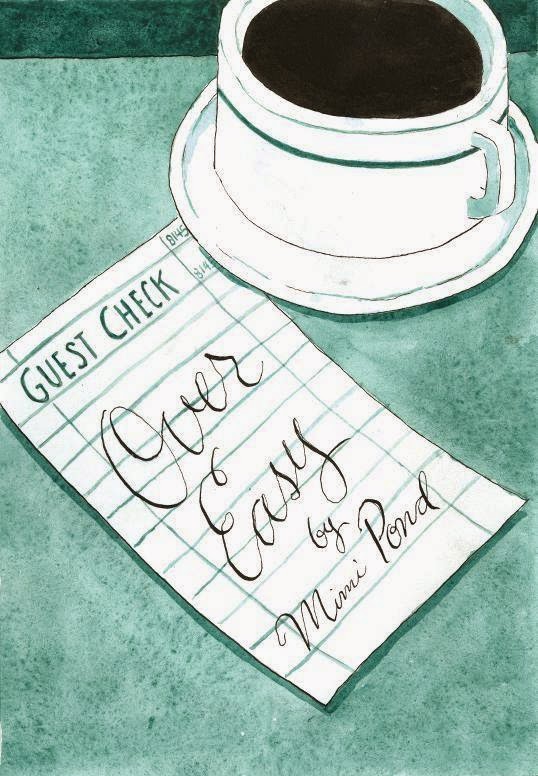
Over Easy
I grew up in a family in the restaurant business, and this book perfectly captured the loony, earnest, random, and convoluted lives of the people who work in diners. It is a wonderful piece of nostalgia, beautifully rendered.

Best Biography:
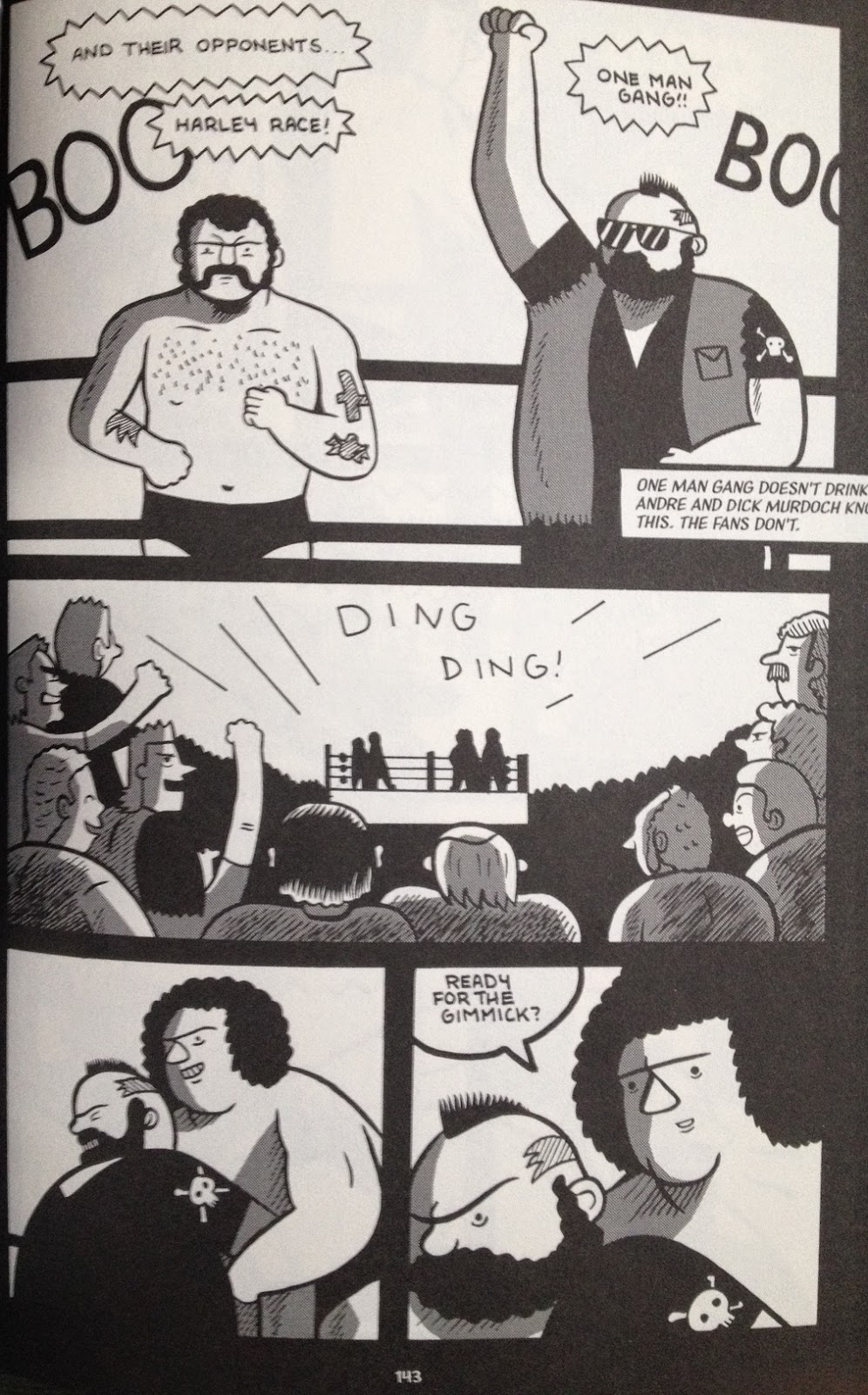
Andre the Giant: Life and Legend
The behind the scenes life of the biggest wrestler ever. I liked that this book was full of interesting and almost unbelievable exploits but also did not shy away from the more difficult and negative aspects of a larger than life figure. This rare kind of biography is fun, complex, and bittersweet.

Best History:
Treaties, Trenches, Mud, and Blood
This may be the most impressive entry of Nathan Hale's Hazardous Tales yet, which is saying something because I LOVE the other books in this series. Its account of World War I is simultaneously informative, interesting, engaging, gruesome, and excellently presented. I am in awe of Hale's artwork and storytelling, and these might just be the best social studies texts I have ever read.

Best Art:
B+F
A gallery sized book full of colorful and beautiful illustrations. The wordless story follows a naked woman and a naked dog as they adventure in a primordial, teeming world. The narrative has a mythic, almost parable kind of quality. Some of the most powerful storytelling I read this year.

Best Superhero Book:
The Shadow Hero
Yang is a perennial presence on my best-of lists. I don't know how he keeps making such excellent books, but I am extremely glad he does. Here he teams up with artist Sonny Liew to tell an exceptional origin story of the first Chinese-American superhero. This book combines superhero comics, biography, family drama, and mythology in unique and gripping ways.

Best Mystery/Thriller:

Jules Feiffer tells and draws a noir story complete with a drunken PI, boxing scenes, Hollywood intrigue, and multiple murders. How could I not love this book?

Best All Ages Book:
Julia's House for Lost Creatures
Truly a book for all ages. I love its beautiful pictures, with its depictions of fantastic creatures like gnomes, trolls, dragons, and fairies. I also loved seeing them dance and jam out to records as well as do household chores. This book is a charmer that should appeal to lots of readers.

Best Sci-Fi Book:
Black Science, Volume 1: How to Fall Forever
An extremely well plotted piece of hard science fiction. It follows the exploits of a family and associates led by an egomaniacal and brilliant father as they travel across hostile dimensions, with little hope of ever returning home. The complicated relationships and character machinations make for excellent intrigue and suspense.

Best Book Starring a Witch, an Owl, and a Cat as Roommates Hooked on Drugs:
Megahex
The artwork is beautiful. The situations are funny, until they are not. The characters seem comical, but they are really depressed and sort of hate each other. There is a lot of cruelty, bickering, and haziness in this book, but the characters come off as so realistic you feel bad for them. I know I may not seem to be doing it justice with this description, but this book is much more complex and moving than it seems. Definitely not for kids.

Thanks for reading my blog, and HAPPY NEW YEAR!

Tuesday, December 30, 2014

Megahex

Megahex may very well be the funniest and saddest graphic novel I read this year. On the surface, the stories seem simple enough. There are three roommates, Megg (a witch), Mogg (her cat/lover), and Owl (a large anthropomorphic Owl) living in a house. They get high, they pull pranks on each other, and they cavort with their friends. Much of the beginning of the book is full of drug humor and gross bits, like an ugly feet contest and their friend Werefwolf Jones taking a grater to his genitals (it's not pretty). What is pretty is the painterly quality of the art, with cartoon images combined with watercolors. The storytelling is also quite deft, with a combination of one page gags like this:
It also has extended sequences like this one, which are episodic looks at their mundane lives:

Owl often is the butt of abuse, and for the most part these sequences are darkly humorous. As I read the book though, I began to realize more and more that it was also strongly about Megg's depression and her overwhelming sense of dread. The latter sequences of the book are a strong portrayal of a very troubled person trying to anesthetize herself to reality. So, in the end for me, this book is a great mass of contradictions: beautiful art used to tell base, stoner jokes and a pretty basic humor structure that slowly builds into a very serious drama. Megahex is a provocative and complex piece of art.

Simon Hanselmann created this book. He publishes new Megg, Mogg, and Owl webcomics each week at VICE. He speaks about his life, inspirations, and work on this book in this interview.

All of the reviews I have read of this book praise it highly. Hilary Brown wrote, "There may be an abundance of stoner comedies, but very few stoner tragedies exist; Hanselmann’s subtle approach makes Megahex both at the same time." Henry Chamberlain explained, "Megahex, as is apt for its name, has magic. It is also way out there, our best connection today to the heyday of the comix underground." Publishers Weekly gave it a starred review and concluded. "The story is depressing as often as it is funny, a cautionary tale that’s at its best when Hanselmann spreads his writing wings, extending beyond a gag strip into an honest exploration of his deeply flawed leads."

And if it is unclear by now, this is a book strictly for adults. It is full of drug use, sexual situations, crude humor, explicit language, disgusting bodily functions, and adult themes.

Megahex was published by Fantagraphics Books, and they provide a preview and much more here.

Monday, December 15, 2014

Black Science, Volume 1: How to Fall Forever

Black Science is at once familiar and compelling. After reading it, I found myself grasping to make analogies to describe it, and here are some of them:
  • Like Venture Brothers, only with dimension travel and played seriously.
  • Like Lost in Space, only darker and with alternate worlds.
  • Like John Carter, only with a family and lab partners and crossing over multiple worlds.
  • Like Dr. Who, but American, with corporate dynamics of Avatar.
  • Like Jumper, with a family, but I have not seen that movie so I can't really do much more contrasting.
What I can say though, is that this series is intriguing and fun, and although it may seem reminiscent of some other media, I did not feel it was derivative. And moreover, the parts I felt were reminiscent of other works were parts I found appealing and enjoyable. This book is an enjoyable bunch of sci-fi adventure.

The basic elements of the story are these: Dr. Grant McKay, a brilliant, pretty unlikeable, and self-centered scientist invents a "Pillar" that allows people to jump through dimensions. His funder, Kadir, is extremely shifty, manipulative, and controlling. On the day that they were to test the pillar, something goes wrong. Grant, Kadir, Grant's wife and collaborator Jen, Sara (an assistant who is having an affair with Grant), Ward (the chief of security), Shawn (a younger male assistant), Chandra (Kadir's sycophantic assistant), and Grant's two children, Pia and Nate (a teen and a tween) are transported to another world. The Pillar is broken and just keeps launching them into different dimensions on a uncontrollable timer. Making matters worse, there are a lot of competing interests among the cast, and some characters have vendettas to sabotage others.

Like the cast, most of the worlds in this story thus far are pretty hostile, inhabited by frog people who look like they were genetically engineered by Frank Frazetta, tribal people who wear futuristic bird-armor, trench warriors who look like they are still fighting World War I, and giant macaques. If the constant jumping, reorienting, in-fighting, and struggling to survive were not enough under these conditions, there are also a couple of people who seem to be aware of what's going on, and who seem to be jumpers themselves, in pursuit of this band of adventurers. Clearly, the plot has a lot going on, but I think that is what makes this series so interesting.

This series was created by Rick Remender, Matteo Scalera, and Dean White. Remender is a writer known for his varied original series Fear Agent, Last Days of American Crime, Strange Girl, and The End League. His work seems ubiquitous today, as he has a long list of credits at Marvel and is currently writing their crossover series Axis, which spawned from his prior work on Uncanny Avengers. Scalera has drawn a number of comics for different companies, most notably runs on Secret Avengers and Deadpool for Marvel. His artwork is very kinetic and sketchy, almost cartoonish, in places, and I think it well portrays movement and emotions. White provides the colors, and his work adds depth and a painterly quality, which make most pages appear like the beautiful, old pulp covers. He also has a long list of comics credits, many of them at Marvel.

Most of the reviews I have read praise this series for its combination of sci-fi and pulp elements. And I have to say I agree with the majority of them. I found the story quite compelling, with lots of cliffhangers and jarring plot twists. The character dynamics are a big part of the appeal, because the disparate players all have different motivations and lengths they will go to, which keeps things fresh and fluid. But don't just take my word for it: Derek Royal wrote, "If you like your science fiction “hard,” and you appreciate a bit of the wibbly-wobbly, timey-wimey stuff, then Black Science is the series for you." Keith Dooley summed up his review simply, "it’s just plain fun."

Black Science is published by Image Comics. They have previews and more information about the entire series (currently at issue #11) here.

Wednesday, December 10, 2014

Kill My Mother

Jules Feiffer cuts a large figure in the world of comics. He was an apprentice to Will Eisner in the 1940s, a time when comics were in a nascent state. He won a Pulitzer Prize for his cartoon work, all but created the genre of alt-weekly comics with his work for The Village Voice, was a comics historian, wrote the screenplay for the classic film Carnal Knowledge, and illustrated classic books like The Phantom Tollbooth. But until now, he had not written or drawn a graphic novel.
And this is some debut. It has lots of elements of 1940s noir films, which I guess should not be a surprise as the book is dedicated in part to Dashiell Hammett, Raymond Chandler, James M. Cain, John Huston, Billy Wilder, and Howard Hawks. It stars the prerequisite private detective, though he is pretty much useless, a drunken lout who tries to be a womanizer and who seems to enjoy wearing women's panties. The folks who actually do things are all women, and what roles they play. There is Elsie, a young widow who decides to work as a secretary for a PI so she can investigate her policeman husband's murder. There is her daughter, Annie, who resents her absent mother while bossing around her friend Artie. There is a mysterious blond who hires the PI to find a tall, blond woman whom she resembles.

And of course, this being a noir tale, there are lots of scenes in seedy place like apartment buildings, smoke filled cabarets, and boxing matches.
 
The story is split into two parts, one in 1933 in Bay City, and the other in 1943 in Hollywood, where we see what has transpired in ten years. The tone of the second half is much different, as we see the movers and shakers behind movies, radio programs, and USO tours. Their world may seem cleaner and more civilized, but there are still bitter undercurrents of jealousy, greed, and potential murder. It is like having a movie and its sequel in one work, and I think that this graphic novel works extremely well in terms of its narrative. In fact, I think this is a book with all kinds of details that demands to be read and then re-read.
Part of what makes the story interesting is how it is laid out. I think that the panels (and at times, lack of panels) are constructed in interesting and fluid ways. There is something experimental about them in how they attempt to track how readers' eyes will move across pages. The sketchiness of those movements are a strength but also sometimes a detriment. The biggest issue I had with this book was that some of the characters look alike, but that seems partly the purpose in a book about changing societal roles and shifting identities.

Feiffer makes a great hash from his many influences, including dimestore novels, old comic strips, and noir films, as well as his years spent as Will Eisner's apprentice. This book is sort of a paean to those modes of telling stories, but it is also a commentary and critique of them, playing with their conventions and making something vital. The story is entrancing, and the artwork is provocative, ranging from paneled scenes to full page splashes that are surprising effecting and poignant. You can read more about Feiffer's influences and choices for making this book in this profile.

All the reviews I have read about this book regard it as a work to be reckoned with, even if they were not always uniformly positive. In the New York Times Sunday Book Review Laura Lippman called it "terrific" and wrote that it was "a thoughtful meditation on female identity and whether the not-so-simple art of murder can ever be defended as a moral necessity." Alan Cheuse called it "a darkly drawn confection." Dash Shaw was more critical of the book's layouts, calling them "herky-jerky" and summing up his review, "It looks like it was fun for him to make. I wish it was fun for me to read."

Kill My Mother was published by W.W. Norton & Company, and they provide a link to previews and more here.

Saturday, November 15, 2014

Treaties, Trenches, Mud, and Blood

If you have read my other reviews of books in this series, you may remember that I feel they may be the best historical graphic novels I have ever read. The facts and events are very well researched, but more importantly they are presented in a most readable and enjoyable way. Nathan Hale's Hazardous Tales are among the most engaging and interesting books I have ever read. So, does this book keep that spotless record intact?

In a word, YES. I thought that this book was most impressive, in that it packed a complete war account into a small space while also creating thrills, showing horrors, and cracking a couple of jokes. Here is the set-up:

And he is correct; this is not a pretty story. It's full of massive casualties, cruelties, and military mayhem. Although the artwork never gets explicit or shows gore, it does show just how brutal and unconscionable the destruction of World War I was. It also tells a very broad story, but not without some specific details included, like the story of Cher Ami, the carrier pigeon that saved 200 lives, and an account of the development of the tank, which was first used in this war to counter trench warfare.

Like I said, what is particularly marvelous to me about this book is how much ground it covers. Part of the reason it accomplishes this goal is the excellent and intelligent artwork. Hale chose to portray the combatants as animals, not only for metaphorical reasons but also because those depictions make it much clearer who is who in the conflict. Although the Executioner tries to play the animals for comic effect, they are not very funny (a few clever puns aside). Seeing a bunch of wolves, eagles, griffins, bulldogs, bunnies, and roosters (among others) engaged in war helps communicate situations almost instantly, in much quicker fashion than using elaborate explanation.
Spoiler: The war ends.
The great economy and efficiency of the artwork works like a combination of infographics and politic cartoons, as you can see in the page above. It is pregnant with ideas and implications about what happened at the end of this war and how it forecasted what would precipitate the next world war. That Hale accomplishes so much in such a short space, and for a wide audience of readers at that, is simply amazing.

In addition to creating the first three entries in this series, Nathan Hale also has drawn two other graphic novels, Rapunzel's Revenge and its sequel Calamity Jack. He has also worked on a variety of children's books, including Frankenstein: A Monstrous Parody and The Dinosaurs' Night Before Christmas. He shares a lot of fun artwork and news via his blog. He speaks much more about his career and work on this book in this interview.

All of the reviews I have read have been very positive. Kirkus Reviews called it "A neatly coherent account with tweaks that allow readers some emotional distance—but not enough to shrug off the war’s devastating cost and world-changing effects." Johanna Draper Carlson praised this entry in a "terrific series" and added, "I really appreciate Nathan Hale’s (the author, not the character, although that applies too) ability to streamline complicated historical events in such readable fashion." Miriam, Age 10 wrote, "This book was interesting and interestingly told, and very entertaining for a history book."

Treaties, Trenches, Mud, and Blood was published by Amulet Books. There is a preview available at Amazon. And if you are a fan of this series like I am, there is good news: a fifth book, The Underground Abductor, is on the way!


Wednesday, November 5, 2014

The Shadow Hero


Gene Yang is one of the premier comics creators working today. He won the Printz Award for his graphic novel American Born Chinese, and he explores themes of immigration, belief, identity, and growing up in his many works, including The Eternal Smile, Level Up, and the twin volumes Boxers & Saints. In The Shadow Hero he once again weaves a tale of immigrant identity, only this time in a superhero narrative. The protagonist in this book is Hank Chu, the son of Chinese immigrants. He works in his dad's grocery store, and after one fateful day his mother insists he become a superhero. The sequence where she tries to get him powers is pretty hilarious.
Turns out all those comic book origin stories don't really work.
It's not exactly the typical superhero origin story, but this is not exactly the typical superhero. Even though he has no powers, Hank trains hard and ends up becoming the Green Turtle. He fights assorted criminals, petty thugs, and even gangsters who are hassling his family for protection money. But this is not just a story about good and bad guys, it also has a lot of heart, showing complex family relationships, mythological beings, a potential romance, and national history.
Not only is this story excellent and multifaceted, what is additionally amazing is that it is all based on an actual Golden Age comic book superhero who has not really appeared anywhere for 70 years. The back matter in this book contains a fascinating look at the original series and also why Yang and Liew felt it needed to be revived here. For interested readers, the original five issues of Blazing Comics are in the public domain and can be accessed and read here.

Sonny Liew is the artist of this book. He has been nominated for an Eisner Award and is best known for Malinky Robot as well as his work on Vertigo’s My Faith in Frankie and Marvel’s adaptation of Sense and Sensibility. Here, his style evokes that of old comic books, but it is also great for depicting mundane scenes and personal interactions. He captures the action and dynamism of superheroes as well as the facial expressions and emotions of regular folks. Yang speaks about their work on this book in this interview. For his part, Liew speaks about his work in this interview conducted by Yang.

This graphic novel has received accolades in many of the reviews I have read. Publishers Weekly gave it a starred review and praised it as "an origin story that blends classic comics conventions...with a distinctly Chinese perspective." The Washington Post's Michael Cavna called it "an inventive and culturally intelligent marvel." Eddie Huang recommended this graphic novel for anyone wanting to learn more about Chinese culture in his The New York Times review.

The Shadow Hero was published by First Second, who has a preview and much more available here. More links for the book are also available at Yang's site here.
Thank you, Gina, for the review copy!

Friday, September 5, 2014

Julia's House for Lost Creatures


Julia's House for Lost Creatures is one of those books that I think could be a graphic novel or also could be considered a children's picture book. It certainly used sequential art conventions. Artist/writer Ben Hatke is known for his prior work on the Zita the Spacegirl series of graphic novels, and this book is published by First Second, one of the premier US publishers of graphic novels. So I am going to call it a graphic novel.

I also could call it a bunch of other things, like delightful, fun, gorgeous, and sweet. Julia has a walking house (like a cute Baba Yaga, only with a giant turtle), and she parks it in a delightful area. She loves her surroundings, but things are just too quiet. So she hangs a shingle inviting lost creatures, and soon the house is overrun with all kinds of critters: goblins, fairies, trolls, mermaids, and a dragon even!
Suddenly quiet is non-existent and chaos reigns. Julia has to hatch a plan to calm things down, and she has a clever solution that resolves matters in classic storybook fashion.
There is so much to recommend this book, from its beautiful artwork and fantastic creatures to Hatke's many humorous details that add yet another layer of joy. Finally, the plot is one I think many parents will appreciate because of the resolution where all of Julia's creatures learn a lesson.

All the reviews I have read about this book have been glowing. Kirkus Reviews wrote, "Hatke steps from graphic novels (Zita the Spacegirl) to the picture-book format with aplomb, blending tropes from both worlds for a sweetly weird domestic adventure." Tasha Saecker called it "An exceptional picture book debut." Bill Boerman-Cornell wrote, "The story is good, but there are at least five other reasons why I love this book." Go click on his name and see what they are.

Julia's House for Lost Creatures was published by First Second, and they provide reviews and other resources here.

Thank you for the review copy, Gina!


Saturday, July 5, 2014

B+F


B+F is a delightful reading experience. It is an oversized, wordless story about a woman and a dog making their way through a primordial world. Along the way, they encounter exotic landscapes and creatures. There are an adorable and puckish skeleton puppy, horrific mole-creatures, and exotic and teeming mini-animals that defy description. And the artwork, as you can see below, is beautiful, colorful, and evocative.

I know many educators might shy away from this book because of the nudity of the female character, but there is nothing prurient about her in the visuals or her actions. She just does not wear any clothes, just like the dog does not either. I found myself completely taken up in their adventures, and there is much here to thrill, delight, frighten, and bewilder readers of all ages. I should also say I was shocked at how everything resolved. I cannot rightly say that I enjoyed the ending, but I also loved it. I felt it was an incredible, moving, and thought-provoking book as well as an admirable narrative achievement.
Those mole critters are up to no good.
Author/artist Gregory Benton has been making comics since the early 1990s for a diverse bunch of publishers including Nickelodeon, Vertigo, Entertainment Weekly, Disney, Tower Records, DC Comics, and World War 3 Illustrated. Benton speaks more about his career and work on this book in this interview.

This book won the 2013 MoCCA Award of Excellence, and it has received great reviews. Publishers Weekly wrote that the story might be a "bit insubstantial, both in terms of length and in character and thematic development, "but that "the artwork is absolutely beautiful, with breathtaking treatment of light." Larry Vossler commented that "B+F caught me completely off-guard with it's alien charm but it also made me heavily uneasy; and I really like that." Patrick Hess called it "an achievement in using art in the purest sense of the word to take the reader on a journey of wonder and reflection."

B+F was published by AdHouse Books, who provide a preview here.

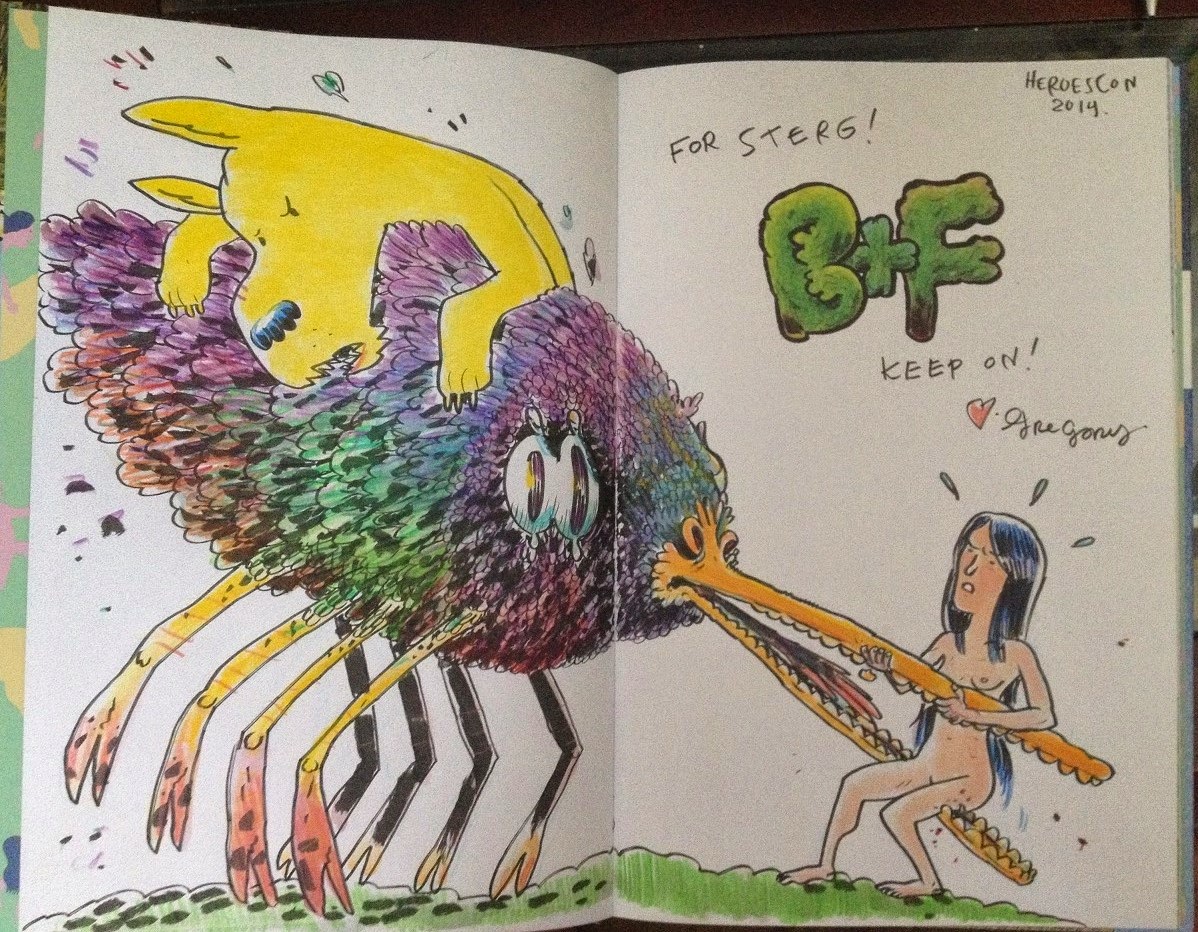
I met Gregory Benton at this year's HeroesCon, and I totally gushed about his work to him. He was a great guy to talk to, and he drew this beautiful dédicace for me.
It is too good for me not to share. Thank you, Gregory!
Ruff!

Sunday, May 25, 2014

Over Easy


Nostalgia is a powerful thing, and even though I was not around when much of the book takes place, Over Easy really brought me back to my restaurant roots. Although it is a fictionalized autobiography, so much of it is based on real events that it features a great sense of verisimilitude. Set in Oakland in the 1970s, the narrative follows Margaret, a recent art school graduate in her 20s as she finds her way in the world. Low on funds and prospects, she finds herself frequenting diners and drawing in her sketchbook.
Margaret ends up with a job in the restaurant, working first as a dishwasher and then moving to the front of the house as a waitress. What really stood out to me was the realism and vitality of the characters and situations. The tumultuous relationships between cooks and waitresses, the vulgar banter, the periodic romantic dalliances, the annoying customers, and the regulars with their unique personalities all combine to create a community, which is lovingly and intricately captured here.
But this book is not just a version of Kitchen Confidential, it is also a time capsule for the period, a look at a time of cultural transformation. I appreciate the blast from the past, but I also see a vibrant cast of characters in almost soap operatic situations. Over Easy is a wonderful concoction of history, high and low culture, and a coming-of-age tale all told in masterful and expressive drawings and monochromatic watercolors. The flourishes of creativity and energy in the artwork complement the narrative expertly.

The creator of this book is Mimi Pond, a writer and artist with multiple magazine credits and also a writer for TV shows like Designing Women, Pee Wee's Playhouse, and The Simpsons (the very first full episode). You can read more about her in this profile at the LA Times. She reveals more about this book and her career in this interview with Publishers Weekly. Or if you prefer to listen to a podcast interview, there is this one from Virtual Memories.

Reviews I have read about this book have been very positive. Los Angeles Review of Books' MariNaomi found much to relate to. Shathley Q summed up that this book "simply comes with the highest praise, and quite simply, deserves to be read." Jeff Provine commented that Pond depicted "life in the restaurant realistically yet magically." NPR's Etelka Lehoczky called this book "a sweet tribute."

A preview and more are available here from Over Easy's publisher Drawn & Quarterly.

Monday, May 5, 2014

Andre the Giant: Life and Legend


Box Brown is someone whose work I follow. He makes comics and also promotes an independent spirit for other comics creators with Retrofit, the publishing company he runs. I love his desire to publish comics of all shapes and sizes. I love his clean lines and geometric figures. I love how the deceptive simplicity of his stories and his artwork combine into some truly evocative and emotional scenes. I think he has created some masterful comics and also some well done shorter pieces. I have noticed upon reflection that his stories tend to focus on exceptional loners or isolated people, like Noah from The Survivalist, who is striving to survive in a doomsday scenario, or Phoebe, a banker who is looking for some summer fun in Beach Girls.
Brown is also a big fan of professional wrestling, and I think he has found his ideal subject in Andre the Giant. Andre was huge in a couple of senses. He suffered from acromegaly, a hormonal disorder where too much growth hormone is produced. He grew to be 7 ft 4 in tall and he weighed well over 500 pounds (maybe tipping the scales at 700 toward the end of his life), and his immense size catapulted him to the top of professional wrestling. He found international fame and toured the world. He fought boxers in exhibition matches. He even went on to bigger fame in Hollywood as Fezzik in the classic movie The Princess Bride.
Brown shows all of these highlights from his life, including the incredible fact that he was neighbors with playwright Samuel Beckett, who ended up driving Andre to school when he grew too large to take the bus. But he also shows a lot of the small moments, with Andre playing cards on the road, his prankster side (he apparently was a big fan of farting in elevators), and his self-medicating with alcohol to sooth his many aches and pains. Andre is presented as a looming but tragic figure and not without faults.  Brown depicts a few instances culled from different accounts where he was casually racist and also recounts how later in life he became somewhat of a deadbeat dad. Brown makes the giant human but also shows his flaws and darker sides, and those aspects are what make this graphic biography truly compelling reading. It is simultaneously an exposé and a tribute to the man.
Box Brown speaks more about his work on this book in this interview and also this interview. He also has a lot to say about his life and career in this interview with Tom Spurgeon.

Almost all of the reviews I have seen about this book have been positive. Alan David Doane wrote, "If you don’t care about the subject matter, I suspect you’ll still enjoy Andre The Giant: Life and Legend; if you do care about wrestling in general or Andre in particular, I have to think you will love this book." Publishers Weekly called it "An engaging biography of a literally larger-than-life character." Chris Sims summed up, "There’s a love in this book, but there’s an honesty, too, and it comes through in every scene, even when the truth, strictly speaking, is exaggerated just a bit." Friend of mine and scholar Bill Boerman-Cornell regretted that there was too much drinking, swearing, and violence in this book to use it for school purposes, "because this is a subject kids would really be interested in."

Andre the Giant: Life and Legend was published by First Second. They have a preview and more information here. Another 10 page preview is also available at Tor.com.

Thank you, Gina, for the preview copy!

Saturday, April 5, 2014

Hidden


Hidden is a book about family and also about the Holocaust. It might be simplistically called Maus for middle schoolers, but that facile description detracts from this book's unique and powerful approach to depicting one girl's experiences and the effects of these events on her adulthood and role as a mother and grandmother.

The main narrative happens in France, and the main character is Dounia. We see the treatment of Jews through her young, naive eyes. Her parents try to shield her from the oppression and mistreatment, explaining that the Star of David she is obligated to wear is actually a symbol of her new job as sheriff. Little by little she sees through that facade to the injustices being done to her, her family, and her friends.
Eventually, she is separated from her family and has to pretend to be another couple's child. For her safety she is sent to life in the country, and she fears she will never see her parents again.
This tale is framed with sequences of Dounia as an old woman. She tells her story to her granddaughter Elsa, and it turns out that this is the first time she has said anything about her childhood to anyone in her family, including her own children. This revelation opens up some old wounds, and casts more light on the pain, suffering, and effects of this historical atrocity.

I found this book powerful and deceptively complex, an informative and evocative tale in the form of a child's account. It contains a combination of extremes that balance each other well, tempering its horrors with art that recalls Schulz's Peanuts with its aura of childhood, wisdom, and innocence. The story was direct, compelling, heartbreaking, redemptive, and full of suspense and drama. I really enjoyed reading it and was moved much more than I thought I would be.

This book is the product of a trio of French creators, writer Loic Davillier and artists Marc Lizano and Greg Salsedo (all their websites are in French).

Hidden does an excellent job explaining the realities of the Holocaust to a middle grades audience (any audience really), and it has received a number of very positive reviews. Terry Hong remarked that this book effectively tells a story that is horrible and relatable, stating that "the French creative team proves spectacularly adept in balancing the nightmare with moments of innocent humor (“pink shoes”), unexpected laughter (“‘Does Grandpa know you were in love with another boy?’”), and joyful discovery (“‘I did it! I did it!’”)." Publishers Weekly also stated that the book "balances the cruelty of the persecution she experiences with the miraculous generosity of her neighbors." There are a number of other reviews at Library Thing, and one called this book "Highly Recommended."

Hidden was published by First Second. They provide a preview and much more here.

Thank you, Gina, for the review copy!